EN
EN
 TR
TR
 DE
DE

Visiting Göbeklitepe: Tickets, Hours and How to Get There from Şanlıurfa
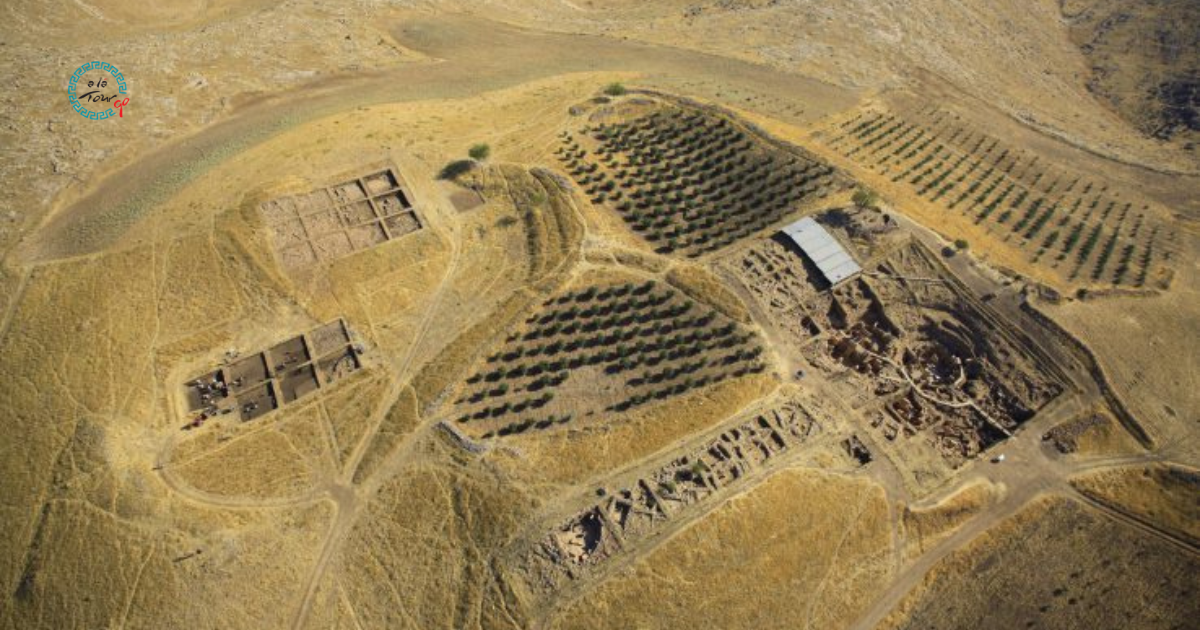
Göbeklitepe is the oldest monumental architecture anyone has found, it rewrote the standard account of how civilisation began, and a visit takes about ninety minutes. All three of those statements are true at once, and the gap between the first two and the third is where most visitors come unstuck.
This guide is the practical half of the story: what the site is physically like, how to reach it, what it costs, and how to build a day around it that does the place justice.
What You Actually See
Set your expectations against this rather than against Ephesus.
Göbeklitepe is a covered excavation, not an open ruin. A large modern canopy protects the main enclosures, and visitors move along raised metal walkways that look down into them from above. You cannot walk among the pillars, touch them, or stand inside a circle. The whole visitable area is compact — a loop of boardwalk around a handful of excavated enclosures.
What you see from that walkway: circles of T-shaped limestone pillars, the tallest around five metres, some carved in relief with foxes, boars, snakes, scorpions, vultures and cranes. A few have arms and hands rendered on their sides, which turns the abstract T into a stylised human figure once you notice it. The carving is confident and deliberate, not primitive.
What you do not see: most of the site. Only a small fraction has been excavated, and geophysical survey indicates many more enclosures still underground. You are looking at the opened corner of something much larger — which is part of the point, but it does mean the visible footprint is modest.
Honest summary: Göbeklitepe is an intellectual experience more than a visual one. Arrive understanding what you are looking at and it is extraordinary. Arrive expecting a vast site to roam and you will be back at the car park in forty minutes wondering what the fuss was.
Why It Matters
Worth five paragraphs of context before you go, because the significance is not self-evident from the stones.
The enclosures date to roughly 9600–8200 BCE. That is about 7,000 years before Stonehenge and the pyramids at Giza — a gap longer than the entire span from the pyramids to now.
The people who built it had no pottery, no metal, no writing, no wheel, and no agriculture. They were hunter-gatherers. And that is the part that caused the trouble, because the standard model of prehistory ran in the other direction: farming produces surplus, surplus produces settlements, settlements produce the organisation needed for monuments. Temples came late, after the granaries.
Göbeklitepe inverts the sequence. Monumental construction on this scale needs planning, labour organisation and a shared reason to bother — and here it appears before farming rather than after it. The question it forces is whether the need to gather for ritual was itself a driver of settlement, rather than its product.
It was inscribed as a UNESCO World Heritage Site in 2018. And it is no longer a lone anomaly, which matters for how you plan your trip — see the Taş Tepeler section below.
Practical Details
These are the figures published at the time of writing. Entrance fees and opening hours are set by the Ministry of Culture and Tourism and are revised periodically, so confirm on muze.gov.tr before you travel.
| Entrance (foreign visitors) | €20 |
|---|---|
| Entrance (Turkish citizens) | Covered by Müzekart |
| Museum passes | Included in MuseumPass Türkiye |
| Opening | From around 08:00–08:30 |
| Closing | Between 17:00 and 19:00 depending on season |
| Last tickets | About 30 minutes before closing |
| Time needed | 60–90 minutes, or closer to two hours with a guide |
| Open | Year round, weather permitting |
The visitor centre at the entrance has exhibits, a short film, a gift shop and a small café. Treat the café as a backup rather than a plan — bring water, especially in summer.
From the car park a shuttle runs up to the shelter. Paths are paved but include some gradient, so it is largely manageable with limited mobility, though the walkway section involves standing and some gentle slope.
Getting There from Şanlıurfa
Göbeklitepe sits roughly 15 km northeast of Şanlıurfa city centre — about 20 to 30 minutes by road. There is no train and no scheduled public bus to the gate.
- Taxi. The straightforward option. Agree the fare before you get in, and agree the waiting arrangement too — you do not want to finish your visit and find no car at a rural site. Hiring the driver to wait, or booking a return time, is normal practice.
- Dolmuş (shared minibus). Services run from the city towards the site. They are cheap and workable but infrequent, and timing your return needs care. Ask at your hotel for the current departure point, as it changes.
- Rental car. The road is signposted and parking at the site is free. The easiest choice if you also want Karahantepe, where public transport is genuinely difficult.
- Guided day trip. Worth considering here more than at most sites, for two reasons: the carvings mean much more with someone explaining them, and a guide will combine Göbeklitepe with the museum and Karahantepe in one efficient day rather than three separate taxi negotiations.
The Mistake Most Visitors Make
Here is the single most useful thing in this guide.
People treat Göbeklitepe as a standalone destination: taxi out, ninety minutes, taxi back, done. Then they feel underwhelmed and cannot quite say why.
The reason is that the objects are not at the site. The finds — the sculptures, the small carvings, the context that makes the pillars legible — are in Şanlıurfa. The site gives you scale and position; the museum gives you everything else. Visiting one without the other is like seeing an empty cathedral and skipping the treasury.
Şanlıurfa Archaeology Museum
One of the largest museums in Turkey and the necessary other half of the trip. It holds a full-scale reconstruction of a Göbeklitepe enclosure, which lets you stand inside what the walkway only lets you look down on.
It is also home to the Urfa Man (the Balıklıgöl statue) — at around 11,000 years old, the oldest known life-size sculpture of a human being, with obsidian eyes and an unnervingly direct gaze. If you see one object in southeastern Turkey, see this one.
As a Ministry museum it is covered by Müzekart and the MuseumPass. Allow two hours; the Haleplibahçe mosaic museum sits in the same complex.
Karahantepe and the Taş Tepeler Project
Göbeklitepe is no longer unique. It belongs to a cluster of contemporaneous Neolithic sites across the region, investigated together under the Ministry's Taş Tepeler ("Stone Hills") project, led by Professor Necmi Karul of Istanbul University.
Karahantepe, in the Tektek Mountains east of Şanlıurfa, is the most striking of them and is open to visitors. It shares the T-shaped pillars and the dating, but has something Göbeklitepe does not: carved human heads, including a remarkable sunken chamber lined with pillars where a human head emerges from the rock face. Where Göbeklitepe is animals, Karahantepe is people.
Practical caveats, honestly stated: it is roughly an hour's drive east of Şanlıurfa, public transport is not realistic, and because it is an active excavation, which areas are open and what is on display changes between seasons. Confirm access locally or through your operator before committing a day to it. Allow one to two hours on site.
Best Time of Day and Year
Season. Spring and autumn are the right answer — April to early June, and late September through November. Şanlıurfa summers pass 40°C routinely and the site, despite the canopy, is open and exposed. Winter is cool and clear and a genuinely good time to come; see our guide to Turkey in winter for why the southeast is better in the cold than most people assume.
Time of day. First thing after opening is best: fewest people, lowest temperature, and the low light that makes the reliefs readable. Late afternoon is the second-best option. Midday in summer is the one to avoid.
What to Bring
- Water, more than you think, from April onwards.
- A hat and sunscreen. The canopy covers the excavation, not the walkway approach.
- Closed shoes. Nothing technical, but the ground is dusty and uneven in places.
- Something to read or listen to. An audio guide is available at the ticket window, or read up beforehand — context is the entire experience here.
- A camera with some zoom. You are viewing from above and at a distance; a phone wide angle flattens the pillars badly.
A One-Day Plan That Works
- 08:30 — Arrive at Göbeklitepe at opening. Walkway, canopy, visitor centre film. Allow 90 minutes.
- 10:30 — Drive back into Şanlıurfa.
- 11:00 — Şanlıurfa Archaeology Museum, including the enclosure reconstruction and the Urfa Man. Allow two hours.
- 13:30 — Lunch in the city. Şanlıurfa's food is a reason to visit in itself.
- 15:00 — Balıklıgöl, the sacred carp pools, and the covered bazaar. Late afternoon is when both come alive.
- Evening — A courtyard café and a glass of mırra, the region's thick unfiltered coffee.
If you have two days, give Karahantepe the second one rather than squeezing it in. Trying to do both sites and the museum in a single day means rushing the thing you came for.
If you would rather not assemble the logistics yourself, this region is the core of our Göbeklitepe, Nemrut and Mesopotamia tour, which covers the sites, the museum and Mardin with a guide and transport included. And if the question holding you back is whether the region is safe to travel in, we answer that directly in is eastern Turkey safe.
Frequently Asked Questions
How much does it cost to enter Göbeklitepe?
Foreign visitors pay €20 at the time of writing; Turkish citizens enter with a Müzekart. It is also included in MuseumPass Türkiye. Fees are set by the Ministry and revised periodically, so check muze.gov.tr before travelling.
How long do you need at Göbeklitepe?
Sixty to ninety minutes for the site and visitor centre, closer to two hours with a guide. The visitable area is compact.
Can you walk among the pillars?
No. The excavation is protected by a canopy and viewed from raised metal walkways above it. You cannot enter the enclosures or touch the stones.
How do you get to Göbeklitepe from Şanlıurfa?
It is about 15 km northeast of the city, 20 to 30 minutes by road. Taxi, dolmuş, rental car or a guided day trip. There is no train or scheduled bus to the gate, and arranging your return is the part people forget.
Is Göbeklitepe worth visiting?
Yes, if you go knowing it is a compact covered excavation rather than a sprawling ruin, and if you pair it with the Şanlıurfa Archaeology Museum where the sculptures and context are. On its own, many visitors find it anticlimactic.
Is Karahantepe open to visitors?
Yes, though it is an active excavation and the accessible areas change between seasons. It is roughly an hour east of Şanlıurfa in the Tektek Mountains, and notable for its carved human heads. Confirm current access locally before planning a day around it.
What is the Taş Tepeler project?
A Ministry of Culture and Tourism research programme led by Professor Necmi Karul of Istanbul University, investigating the cluster of Pre-Pottery Neolithic sites around Şanlıurfa — Göbeklitepe, Karahantepe and others — as a connected whole rather than isolated finds.
What is the best time of year to visit?
Spring and autumn. Summer temperatures in Şanlıurfa routinely exceed 40°C and the site is exposed. Winter is cool, clear and genuinely pleasant.
Türkiye'yi Keşfetmeye Hazır mısınız?
Uzman rehberlerimizle Türkiye'nin en etkileyici destinasyonlarında unutulmaz bir yolculuğa çıkın.
Turları Keşfet