EN
EN
 TR
TR
 DE
DE

Turkey in Winter: Seven Regions That Are Better Without the Crowds
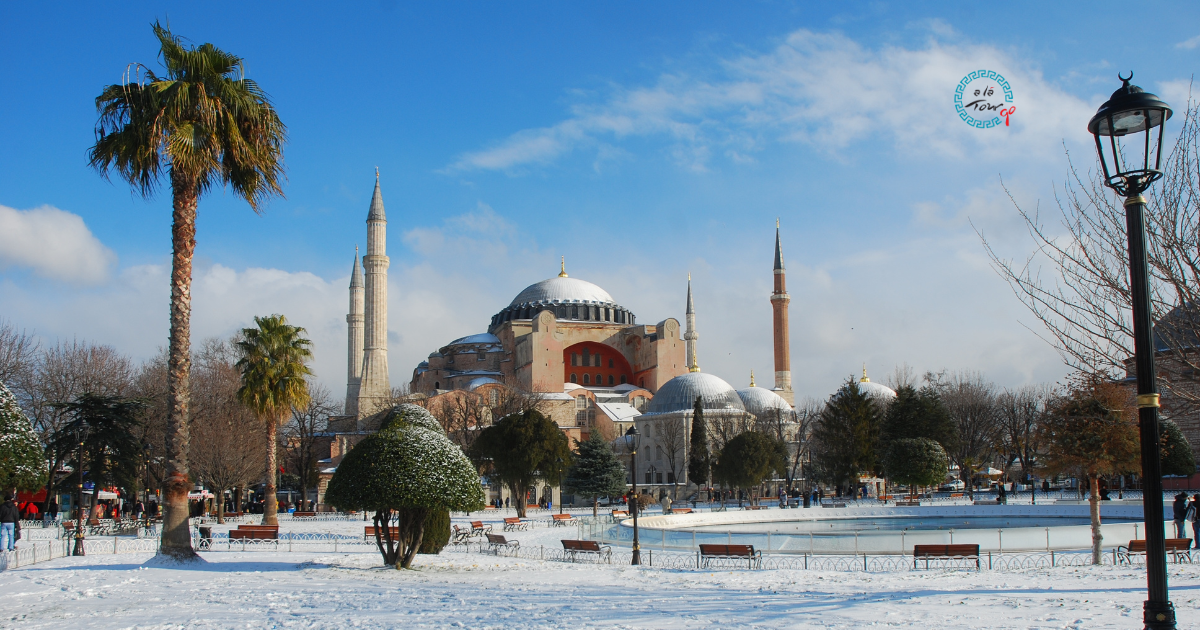
Most travel advice treats winter in Turkey as the season you settle for. That is a misreading. Winter does not give you a lesser version of the summer trip — it gives you a different country, and in several regions a demonstrably better one.
Some of this is simple arithmetic. Hagia Sophia in July means ninety minutes in a queue; in January it means walking in. Some of it is climate: the southeast of Turkey is punishing in summer and pleasant in winter, which is the exact opposite of how it gets marketed. And some of it is atmosphere that only exists in the cold.
Here are seven regions where winter is the right answer — and, at the end, an honest account of where it is not.
1. Istanbul
January: 9°C by day, 3°C at night, rain on roughly nine days.
Istanbul in winter is the same city with the queue removed. Topkapı Palace, the Basilica Cistern and Hagia Sophia are walk-in propositions. The Bosphorus ferries run half empty. Hotel rates outside the New Year window sit at their annual floor, which often means a room you could not afford in June.
The city also does winter well on its own terms: sahlep and roasted chestnuts on the street, tea houses with coal braziers, the Golden Horn under low grey cloud looking like every Ottoman miniature of it. Rain is frequent but rarely all day.
If you are timing a trip around the turn of the year, our guide to New Year's Eve in Istanbul covers what to book and what to avoid.
2. Mesopotamia: Şanlıurfa, Mardin and Göbeklitepe
January: Şanlıurfa 11°C by day, Diyarbakır 7°C, Mardin around 8°C.
This is the strongest argument in the entire guide. Southeastern Anatolia routinely passes 40°C in July and August. Walking the stone lanes of Mardin or standing on the exposed hillside at Göbeklitepe in that heat is not sightseeing, it is endurance.
In winter the same places sit in the 7–12°C range: cool, bright, and entirely walkable. Mardin's terraces look out over the Mesopotamian plain in clear winter light. The excavation site at Göbeklitepe has almost no shade, which is a serious problem in August and no problem at all in January. Şanlıurfa's covered bazaar and the sacred pools at Balıklıgöl are at their most atmospheric when the air is cold and the tea is constant.
The region's food culture is also built for the season — slow-cooked lamb, lentil soups, and the thick unfiltered coffee called mırra.
This is the heart of our Göbeklitepe, Nemrut and Mesopotamia tour. One caveat: Mount Nemrut's summit road closes under snow, typically from late autumn to spring, so a winter trip to this region covers the archaeology and the cities rather than the mountain.
3. Cappadocia
January: around 4°C by day, below freezing at night.
Snow on the fairy chimneys is the image everyone wants, and in winter you may actually get it. The trade-off is real too: balloon flights cancel far more often in winter weather, and some valley trails are muddy or icy.
We have covered this one in depth separately — see Cappadocia in winter: is it worth visiting in December and January for the full picture, including how to handle the balloon question.
4. Safranbolu and the Western Black Sea
January: around 5°C by day, freezing at night, regular snow.
If one place in Turkey is made for winter, it is Safranbolu. The UNESCO-listed Ottoman town is a tight grid of timber-framed houses with overhanging upper floors, and under snow it stops looking like a preserved site and starts looking like a functioning eighteenth-century town. Wood smoke, lit windows, almost no other visitors.
The coast at Amasra an hour north is bleak and beautiful in winter — a fishing town on a rocky headland, empty restaurants serving what came in that morning. The road between them through the Küre Mountains is one of the best drives in the country.
Covered in our Safranbolu, Amasra and Black Sea coast tour.
5. Pamukkale and the Lakes
January: 11°C by day, 3°C at night.
Pamukkale has a specific winter advantage that has nothing to do with crowds. The travertine terraces are fed by thermal water at roughly 35°C. In August, walking barefoot through warm water in 38°C air is unremarkable. In January, with cold air above and steam rising off the white terraces, it becomes the thing people remember from the whole trip.
The ancient city of Hierapolis on the ridge above is a large, exposed site — far more comfortable to walk in winter. And the surrounding lake district, quiet in any season, is at its emptiest.
See our Pamukkale, Lakes and Ancient Cities tour.
6. The Mediterranean Coast: Antalya to Alanya
January: 15°C by day, 5°C at night — but 210mm of rain across about 13 days.
Antalya is not a winter beach destination and anyone selling it as one is being dishonest. What it is, in winter, is the most comfortable walking and hiking climate in the country.
The ancient cities along this coast — Perge, Aspendos, Side, Termessos, Olympos — are large sites with no shade, and 15°C is a far better temperature to explore them in than 35°C. The Lycian Way is genuinely at its best between November and April. The citrus harvest runs through winter and the mountains behind the coast carry snow while the orange trees are in fruit, which is a strange and excellent thing to see.
The rain is the real caveat: it comes in heavy bursts rather than drizzle, so build flexible days. Our Antalya and Alanya tour covers the route.
7. Kars, Van and the Far East
January: Van 3°C by day and −6°C at night; Erzurum often below freezing all day, with nights near −16°C. Kars is colder still.
This is the extreme option, and the only one on this list where winter is not just better but the entire point. The medieval ruins of Ani under snow, on the plateau above the Armenian border, are one of the most striking sights in Turkey. Kars itself — a Russian-planned grid of nineteenth-century stone buildings — makes complete sense in deep cold in a way it never does in summer. Lake Van sits in a ring of white mountains.
Go with open eyes: this is serious winter. Roads close, flights divert, and plans need slack in them. Our Lake Van, Ishak Pasha and Ani tour runs in the warmer months for exactly that reason — if you want the east in winter, it is a trip to plan deliberately rather than casually.
The Touristic Eastern Express
The one winter experience in Turkey with a genuine cult following. The Turistik Doğu Ekspresi runs Ankara to Kars, 1,310 km in roughly 34 hours, sleeper compartments only, three departures a week, operating December to March. On the eastbound run it stops at Ilıç and Erzurum for around three hours each so passengers can get out and look around; westbound it pauses at Erzincan, Divriği and Sivas.
The catch: tickets go on sale 30 days before departure and sell out within minutes. Book through the official TCDD channels — the website ebilet.tcddtasimacilik.gov.tr, the mobile app, or the call centre on 444 82 33. Cancellations are released regularly, so checking repeatedly does work.
What Is Genuinely Worse in Winter
An honest guide has to include this part.
- The Aegean coast and Bodrum. Mild on paper — Bodrum averages 15°C in January — but the resorts largely shut. Boats do not run, most restaurants close for the season, and coastal towns feel abandoned rather than peaceful. Ephesus itself is excellent in winter; the coast around it is not.
- The Black Sea highlands. Uzungöl is reachable, but the high plateaus above it — Ayder and the yaylas — are snowbound, and access roads close. Sumela Monastery can close in heavy snow.
- Cappadocia balloon flights. They fly in winter, but cancellations for wind and snow are far more frequent. Build in spare days if the balloon is the reason you are going.
- Mount Nemrut. The summit road is closed by snow for much of the winter. There is no workaround.
- Daylight. In late December the sun sets in Istanbul before 17:00. Sightseeing days are short and you need to plan around it.
Practical Notes
Getting around. Domestic flights are cheap and frequent, and in winter they are the sensible way to cover distance — a road that takes seven hours in June can take considerably longer in snow. Intercity buses run reliably but slow down. If you drive, winter tyres are legally required on intercity routes during the winter months and chains are worth carrying in the east.
Packing. Layers rather than one heavy coat, because interiors are heated hard. Waterproof outer layer, because most of Turkey's winter is wet rather than frozen. Shoes with grip — wet marble outside mosques and worn cobbles in old towns are the real hazard. For the east, proper cold-weather clothing, not city winter clothing.
Costs. Outside the 28 December–2 January window, winter is the cheapest time of year to travel in Turkey. Hotel rates in Istanbul and Cappadocia fall substantially, and domestic flights are at their lowest.
Ramadan. Check the dates before booking, as they shift roughly eleven days earlier each year. It affects restaurant hours in conservative regions, and the southeast in particular.
So Where Should You Actually Go?
If you have four or five days, take Istanbul. It is the region where winter costs you nothing and saves you hours of queueing.
If you have a week or more and want the trip that makes least sense in summer, go southeast — Şanlıurfa, Göbeklitepe, Mardin. You will be walking in 10°C where summer visitors were suffering in 42°C, and the sites will be close to empty.
If you want the photographs, Safranbolu under snow or Ani on the frozen plateau.
And if you are still deciding when to come at all, our month-by-month guide to eastern Turkey breaks the calendar down region by region.
Frequently Asked Questions
Is Turkey too cold to visit in winter?
It depends entirely on where. Antalya averages 15°C in January and Istanbul 9°C — both comfortable for sightseeing. Erzurum and Kars are genuinely severe, often below freezing all day. Turkey spans several climates and "winter in Turkey" is not one thing.
Does it snow in Istanbul?
Occasionally. Most winters bring at least one snowfall, usually in January or February, and it can briefly disrupt flights and roads. Rain is far more common.
Are tourist sites open in winter?
Yes, with shorter hours. Most major sites switch to a winter timetable with earlier closing, typically from October to April. The Grand Bazaar and most museums close on 1 January.
When do Cappadocia balloons fly in winter?
They operate year-round, but winter cancellation rates for wind and snow are much higher than in summer. If the balloon matters to you, allow two or three possible mornings rather than one.
How do I get tickets for the Eastern Express?
Tickets are released 30 days before departure through TCDD's official channels and sell out within minutes. Cancellations are returned to the pool regularly, so checking repeatedly is a legitimate strategy. The service runs December to March, three times a week.
Is winter cheaper in Turkey?
Significantly, outside the New Year week. Hotel rates and domestic flights are at their annual lowest from January to March.
Türkiye'yi Keşfetmeye Hazır mısınız?
Uzman rehberlerimizle Türkiye'nin en etkileyici destinasyonlarında unutulmaz bir yolculuğa çıkın.
Turları Keşfet