EN
EN
 TR
TR
 DE
DE

Mount Nemrut at Sunrise: The Complete Practical Guide
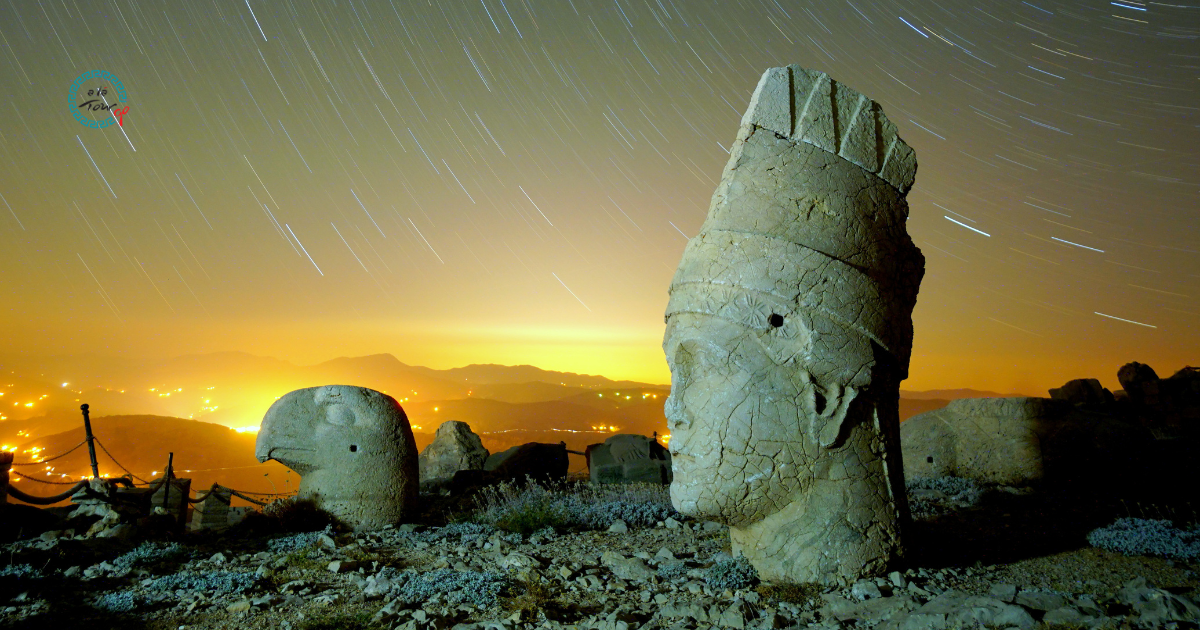
On a bare summit in southeastern Turkey, at 2,134 metres, a first-century king built his own tomb and surrounded it with colossal stone portraits of himself and the gods he claimed as relatives. Earthquakes later knocked the heads off the bodies, and they now sit on the terraces at eye level, looking out over a landscape that has not changed much since.
Mount Nemrut is one of the two or three most photographed places in Turkey, and almost all of those photographs are taken at sunrise. This guide covers how to get there, what it costs, when the road is open — and makes the case that sunrise is not actually the right answer for most people.
What You Are Looking At
Antiochus I ruled Commagene, a small kingdom wedged between Rome and Parthia, in the first century BCE. Being small and surrounded, he did what small kingdoms do: he built a monument that claimed more than his territory justified.
The complex is a 50-metre artificial mound of crushed rock — the tumulus — with a terrace on each of three sides. Antiochus's tomb is believed to lie beneath that mound. It has never been found. The rock is loose and unstable, every excavation attempt has failed, and more than a century of archaeology has not opened it. You are standing on top of an unexcavated royal burial.
On the terraces sit seated figures five to nine metres tall: Antiochus himself alongside Zeus-Oromasdes, Apollo-Mithras, Heracles-Artagnes and the goddess Commagene — deliberately fused Greek and Persian deities, a statement about which world the kingdom belonged to. The bodies remain seated; the heads lie on the ground in front of them, toppled by earthquakes. Nobody has restored them, and that is the right decision.
It became a UNESCO World Heritage Site in 1987.
Sunrise or Sunset? The Honest Answer
This is the decision everyone gets wrong, so it goes near the top.
The two terraces face opposite directions. The East Terrace has the most complete arrangement of figures and faces the sunrise. The West Terrace has the better preserved heads and faces the sunset. They are not interchangeable views of the same thing.
The case for sunrise
It is the iconic version. The East Terrace is the more complete composition, the light comes up behind the heads, and there is a particular quality to the fifteen minutes before the sun appears that is hard to describe and easy to remember.
The case against sunrise
Three honest objections.
The timing is brutal. In midsummer the sun comes up shortly after 05:00, which means leaving Karadut around 04:00 and being on your feet in the dark. The ticket booth opens at 04:00 specifically to allow this, which tells you how early the day starts.
It is cold. Properly cold. At 2,134 metres, before dawn, in July, you will be uncomfortable in anything less than a jacket. People arrive from 35°C Şanlıurfa in a t-shirt and spend the whole experience shivering instead of looking.
It is the crowded option. Sunrise draws the larger crowd, because everyone read the same article. Sunset on the same day is often noticeably quieter.
So what should you do?
If you can only manage one: consider sunset. The West Terrace heads are in better condition, the light is just as good, the air is warm, you are not awake at 03:30, and there are fewer people. For most travellers this is the better experience and almost nobody tells them so.
If you can manage both — which means staying in Karadut rather than passing through — do both. Sunset on the West Terrace, a night in the village, sunrise on the East Terrace. That is the full version and it costs you one extra night.
If you are on a group tour, the schedule decides for you. Worth asking which one your itinerary includes before booking, because operators differ and it genuinely changes the day.
Practical Details
Figures published at the time of writing. Fees and hours are set by the Ministry of Culture and Tourism and revised periodically — confirm on muze.gov.tr before you travel.
| Entrance (foreign visitors) | €10 |
|---|---|
| Entrance (Turkish citizens) | Covered by Müzekart |
| Students under 18 | Free |
| Ticket booth | From 04:00, closing mid-afternoon |
| General visiting hours | Around 08:00–19:00 |
| Summit altitude | 2,134 m |
| Walk from car park | About 600 m uphill, 20–30 minutes |
| Time on the summit | 1–2 hours for both terraces |
| Season | Roughly April to October |
When the Summit Is Actually Accessible
This is the detail that ruins trips, so plan around it rather than hoping.
The summit road closes under snow for much of the winter. The practical season runs from around April to October, and the best months are May, June, September and October. Even in early April you can meet significant snow and icy sections on the approach and on the path.
This has a real consequence for itinerary planning. Southeastern Turkey is at its most comfortable in winter — Şanlıurfa and Mardin sit at a pleasant 8 to 12°C while summer passes 40°C, which is the main argument of our guide to Turkey in winter. But Nemrut is the one thing in the region you cannot add to a winter trip. A southeastern itinerary in January covers Göbeklitepe, Mardin, Diyarbakır and the museums beautifully, and skips the mountain.
If Nemrut is the reason you are coming, you are travelling in late spring or autumn. That is not negotiable with the weather.
Getting There
Nemrut is genuinely remote, and the logistics are the hardest part of the visit.
The nearest base: Karadut
Karadut is the village closest to the summit, about 13 km from the top, and it is where you want to sleep if you intend to catch either sunrise or sunset without a two-hour pre-dawn drive. There are several guesthouses and small hotels, from simple to comfortable. Most will arrange the transfer up to the car park, and that is the normal way to do it.
Staying in Karadut is the single decision that makes this visit easy rather than exhausting.
From Adıyaman
Adıyaman is the nearest city with an airport and the usual arrival point. From there you continue via Kâhta and on up to Karadut or directly to the summit car park. Options are a hired car, a taxi arranged for the round trip, a shuttle, or a guided tour.
One honest note: Adıyaman was among the provinces heavily affected by the February 2023 earthquakes, and reconstruction is ongoing. Tours to Nemrut operate, but if you are arranging your own accommodation in the city rather than in Karadut, ask specifically about the current situation rather than assuming a listing is current.
From further afield
Malatya is the other airport option, on the northern approach. From Cappadocia it is roughly 494 km and about seven hours by road — which is why Nemrut is usually visited as part of a southeastern route rather than as a detour from central Anatolia.
There is no public bus to the summit. Whatever else you arrange, the last stretch is a car.
The Walk
From the car park it is roughly 600 metres uphill to the terraces, on a stone path, taking most people 20 to 30 minutes.
It is not technical and it is not dangerous. What catches people out is the altitude — 2,134 metres is high enough that a short climb feels harder than the same climb at sea level, especially if you have come up from the plain that morning. There are benches along the path, and using them is normal rather than a defeat.
For sunrise you will be walking this in the dark. Bring a torch or use your phone, and allow more time than the daytime estimate.
If anyone in your party has a heart condition, significant breathing difficulty or serious mobility limits, take this seriously and discuss it in advance. There is no vehicle access beyond the car park and no way to shorten the climb.
What to Bring
- A proper jacket, whatever the forecast says for the valley. This is the item people regret most.
- A hat and something for your hands for sunrise, even in summer. Wind at the summit is constant.
- Shoes with grip. Stone path, loose gravel in places, and possibly ice at the edges of the season.
- A torch for the pre-dawn walk.
- Water. There is little at the top.
- A camera that handles low light. Phones struggle with backlit heads against a brightening sky; if you have a camera with manual control, this is the trip to bring it.
- Something hot in a flask if you are doing sunrise. You will be glad of it and so will everyone near you.
How It Fits Into a Route
Nemrut is rarely a destination on its own — it is the high point of a southeastern circuit. The natural combination is with Şanlıurfa and Göbeklitepe to the south, Mardin and the Mesopotamian plain to the southeast, and Gaziantep with the Zeugma mosaics to the west.
A workable shape: Şanlıurfa and Göbeklitepe first (see our Göbeklitepe practical guide), then north to Karadut for Nemrut at sunset and sunrise, then on to Mardin and Midyat.
That is close to the route of our Göbeklitepe, Nemrut and Mesopotamia tour, which runs in the months when the summit road is open. And if the question in the back of your mind is whether this region is safe to travel in, we answer it directly in is eastern Turkey safe.
Frequently Asked Questions
How much does it cost to visit Mount Nemrut?
€10 for foreign visitors at the time of writing; Turkish citizens enter with a Müzekart, and students under 18 free. Fees are set by the Ministry and revised periodically, so check muze.gov.tr before travelling.
When is Mount Nemrut open?
The ticket booth opens at 04:00 to allow sunrise visits, with general visiting hours running roughly 08:00 to 19:00. The summit road closes under snow for much of the winter, so the practical season is around April to October.
Is sunrise or sunset better at Nemrut?
Sunrise is the famous option and gives you the more complete East Terrace. Sunset gives you the better-preserved heads on the West Terrace, warmer air, fewer people and no 03:30 start. If you can only do one, sunset suits most visitors better. If you stay in Karadut, do both.
How long is the walk to the top?
About 600 metres uphill from the car park, 20 to 30 minutes on a stone path. Not technical, but the 2,134 m altitude makes it harder than the distance suggests. There are benches along the way.
Can you visit Mount Nemrut in winter?
Generally no. The summit road is closed by snow for much of the winter and there is no workaround. A winter trip to southeastern Turkey works well for Göbeklitepe, Şanlıurfa and Mardin but has to leave Nemrut out.
Where should I stay to visit Nemrut?
Karadut, the village about 13 km from the summit, is the practical base and has several guesthouses that arrange transfers up to the car park. Staying there rather than in Adıyaman is what makes sunrise or sunset manageable.
Has the tomb of Antiochus been found?
No. The tomb is believed to lie under the 50-metre tumulus of crushed rock, but the rock is loose and unstable and every excavation attempt has failed. It remains unopened.
How cold is it at sunrise?
Cold enough to need a jacket in July. At 2,134 metres before dawn, with constant wind, visitors arriving from the hot plain below are routinely caught out. This is the most common mistake people make here.
Türkiye'yi Keşfetmeye Hazır mısınız?
Uzman rehberlerimizle Türkiye'nin en etkileyici destinasyonlarında unutulmaz bir yolculuğa çıkın.
Turları Keşfet