EN
EN
 TR
TR
 DE
DE

Turkish Carpets and Kilims: How to Buy One Without Getting Ripped Off 2026

The Turkish carpet market is one of the most sophisticated sales operations in the world — and most visitors don't realise this until they've already bought something they later regret. The pressure tactics are refined over generations, the tea is very good, the stories are compelling and the prices are completely flexible in ways that favour experienced buyers.
This guide tells you exactly how the market works, what things actually cost and how to buy something you'll be genuinely happy with.
First: Understand the Market Structure
Walking into a carpet shop in Istanbul's Grand Bazaar, Cappadocia or Bodrum means entering a system that has been refined over centuries. Here is how it works:
The initial price is meaningless. A carpet quoted at €800 can often be bought for €350–450 after negotiation. The initial price is not an anchor — it is a test of how much you know.
The tea and the story are part of the sale. Accepting tea commits you to nothing. Listening to the story of the carpet (the village it came from, the weaver's grandmother, the natural dyes) is interesting and often partially true — but it is also sales technique. Both things can be simultaneously true.
Every seller describes their carpets as hand-knotted. Many are not. Knowing how to verify this is the most important practical skill you can develop before entering a carpet shop.
Hand-Knotted vs. Machine-Made: How to Tell the Difference
This is the single most important distinction in the carpet market.
How to check:
- Turn the carpet over and look at the back
- Hand-knotted: The knots on the back are slightly irregular; the pattern on the back looks like a slightly fuzzier version of the front
- Machine-made: The back looks perfectly even and grid-like; the pattern on the back is sharp and identical to the front
The fringe test:
- Hand-knotted carpets have fringe that is an extension of the warp threads — it is part of the carpet
- Machine-made carpets often have fringe sewn on separately — you can see the stitching where it attaches
The fold test:
- Fold a corner of the carpet back on itself and look at the fold
- Hand-knotted: you can count individual knots at the fold
- Machine-made: the pile looks uniform and the fold is completely even
Natural Dyes vs. Chemical Dyes: Does It Matter?
Yes — for longevity and value, it matters significantly.
Natural dyes — from plants, insects and minerals — mellow beautifully over decades. Chemical dyes can fade unevenly, particularly in direct sunlight.
How to check:
- Wet your finger and rub it firmly on the carpet pile; if colour transfers to your finger, chemical dyes are likely
- Look at the base of the pile near the knots — natural dye colours tend to be slightly less saturated at the base than at the tip; chemical dyes are uniform throughout
- Examine older sections — if the carpet has different-age sections (repairs, variations), natural dyes will show subtle colour variation; chemical dyes will look uniform
Real 2026 Price Ranges
These are honest market prices based on current conditions. Any seller who refuses to negotiate toward these ranges when you have done your research is simply waiting for a less informed customer.
Machine-made carpets (not worth buying for quality, only for decoration):
| Size | Price Range |
|---|---|
| Small (60×90cm) | €30 – €80 |
| Medium (120×180cm) | €80 – €200 |
| Large (200×300cm) | €150 – €400 |
Hand-knotted wool kilims:
| Size | Price Range |
|---|---|
| Small (60×90cm) | €80 – €300 |
| Medium (120×180cm) | €200 – €600 |
| Large (200×300cm) | €400 – €1,200 |
Hand-knotted wool carpets:
| Size | Price Range |
|---|---|
| Small (60×90cm) | €150 – €500 |
| Medium (120×180cm) | €400 – €1,500 |
| Large (200×300cm) | €900 – €3,500 |
Hand-knotted silk carpets:
| Size | Price Range |
|---|---|
| Small (60×90cm) | €400 – €1,500 |
| Medium (120×180cm) | €1,200 – €4,000 |
| Large (200×300cm) | €3,000 – €12,000+ |
Important: These are negotiated final prices, not starting prices. A seller quoting €2,000 for a medium wool carpet is not necessarily overcharging — the final price after negotiation may well fall in the range above.
The Negotiation Process: Step by Step
Step 1: Visit at least three shops before buying anything
This is non-negotiable. The price variation between shops for equivalent quality is significant, and you need the comparison data before you can negotiate effectively. Tell yourself before you enter any shop: "I am looking today, not buying."
Step 2: Show genuine interest in a specific carpet
Pick one or two carpets you actually like and ask questions about them — material, origin, age, dye type. This signals serious interest and prompts the seller to invest in the relationship.
Step 3: Ask for the price — and say nothing
After they quote a price, stay silent for a moment. Do not react. This pause alone often produces a spontaneous reduction.
Step 4: Name a counter-price — approximately 40–50% of the asking price
This sounds aggressive but is standard practice. A €1,200 asking price: counter with €500–600. The seller will be taken aback and then engage. This is where the negotiation begins.
Step 5: Be prepared to walk away — and actually do it
The most powerful negotiating tool in any bazaar is genuine willingness to leave. Walk toward the door. In the majority of cases, the seller will call you back with a better price. If they don't, the price was already at their limit.
Step 6: The final price — when to accept
When the seller's price and your counter-price are within 10–15% of each other, you are in the range. Accept. Do not negotiate indefinitely — it becomes unpleasant and the relationship deteriorates.
What Every Seller Will Tell You (And What It Means)
| What they say | What it means |
|---|---|
| "This is my final price" | It is not |
| "This carpet is from my village / my grandmother wove it" | Possibly partially true; primarily sales technique |
| "Natural dyes only — I guarantee it" | Verify with the wet finger test yourself |
| "This carpet will increase in value" | Sometimes true for exceptional pieces; not a reliable investment claim |
| "I'll give you a special price because I like you" | Standard opening for every customer |
| "Shipping is free" | Calculate the shipping cost before agreeing — it often exceeds the discount |
Where to Buy
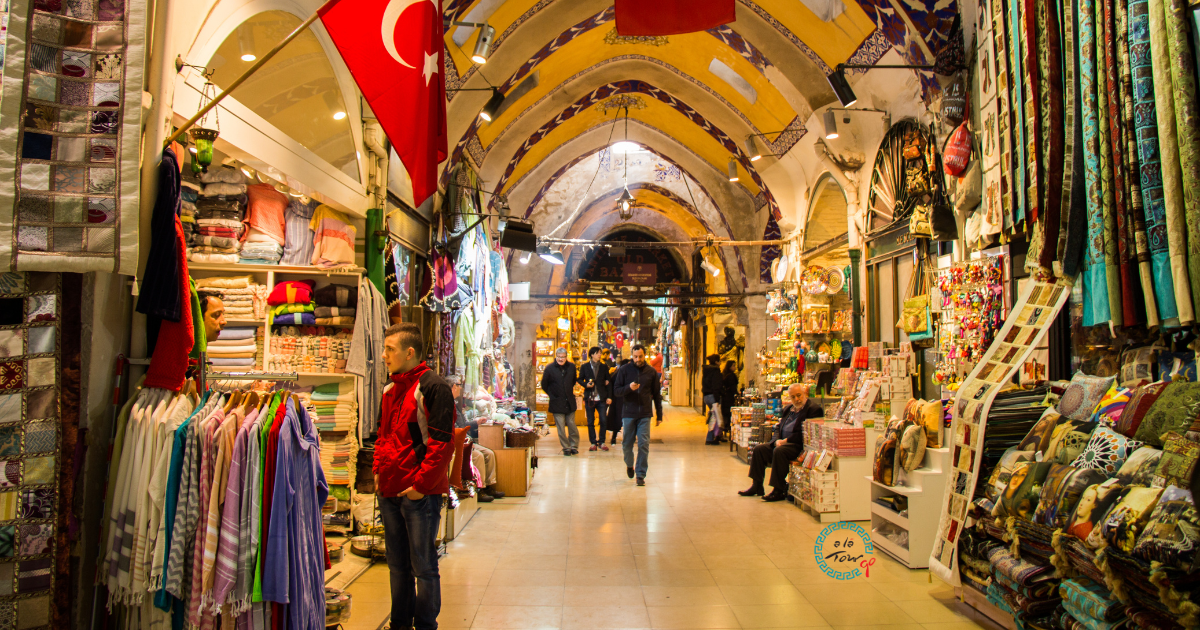
Istanbul Grand Bazaar: The largest concentration of carpet sellers; prices are negotiable; quality varies enormously. The specialist Bedesten section inside the Bazaar has higher-quality and higher-priced pieces. Best for: Experienced buyers who know what they're looking at.
Cappadocia: Several excellent carpet cooperatives where you can watch weaving in progress; quality is generally high; prices slightly higher than Istanbul but the context adds value. Best for: First-time buyers who want some assurance of quality.
Southeastern Turkey (Gaziantep, Şanlıurfa): The closest buying to source; prices are lowest here; the kilim tradition of Southeastern Turkey is particularly fine. Best for: Those on a guided tour of the region.
What to avoid: Carpet shops attached to tourist hotels, or any shop that a guide or driver specifically recommends (they receive commission).
Visiting Turkey on a guided tour?
Our guides know which carpet sellers offer genuine quality and fair starting prices — and which ones to walk past.
Reach us via the WhatsApp button on the right side of our website — we respond within 24 hours.
Türkiye'yi Keşfetmeye Hazır mısınız?
Uzman rehberlerimizle Türkiye'nin en etkileyici destinasyonlarında unutulmaz bir yolculuğa çıkın.
Turları Keşfet