EN
 TR
 DE

Tea and Coffee in Turkey: The Rules Nobody Tells You
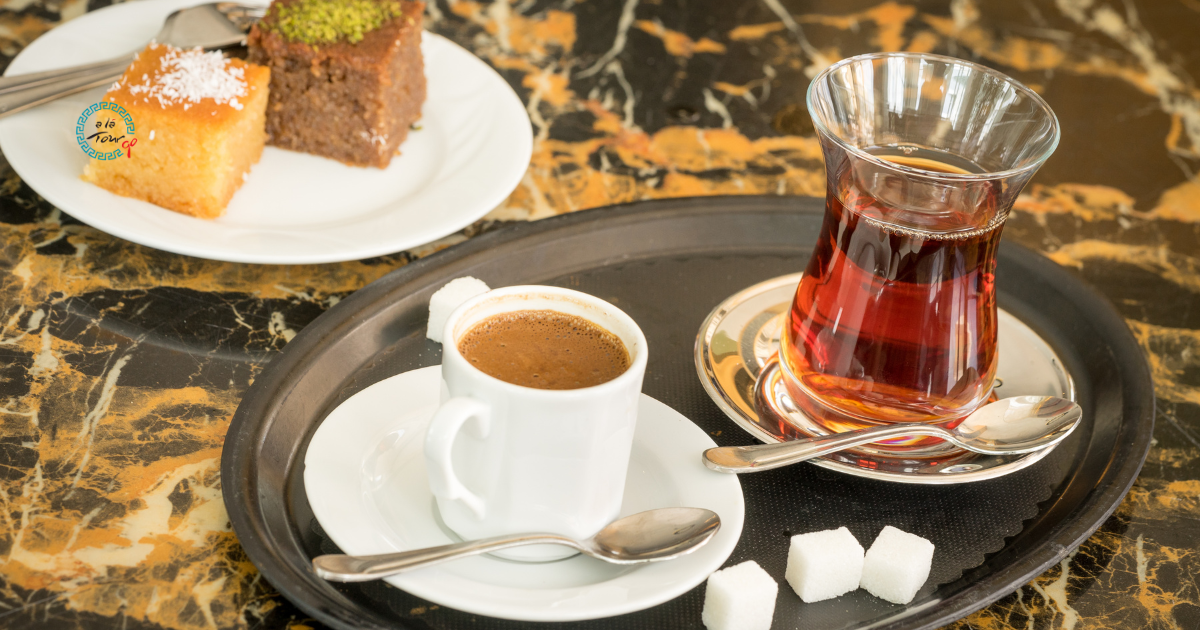
Turkey is, by a wide margin, the world's heaviest tea-drinking nation per person. Estimates put the average somewhere around a thousand glasses a year. Coffee carries the reputation abroad, but tea is what the country actually runs on, and the two are not interchangeable: tea is constant and casual, coffee is an occasion.
Tea
Turkish tea is grown on the Black Sea coast around Rize, brewed in a çaydanlık, a stacked double kettle. Water boils below; strong tea steeps above. Your glass is poured from the top pot and diluted from the bottom one, which is how one brew serves everybody at the strength they want.
So you do not order tea. You order a strength:
| Açık | Weak, amber, the easiest start for most visitors |
|---|---|
| Demli or koyu | Strong and dark, the default for most Turks |
| Tavşan kanı | Literally rabbit's blood: deep red, perfectly brewed, the ideal |
It comes in a small tulip-shaped glass with two sugar cubes on the saucer. No milk. Asking for milk is not offensive, it simply does not exist here, and the glass is designed to be held by the rim so you do not burn your fingers.
Tea is offered everywhere: shops, offices, barbers, carpet dealers, government buildings. Accepting a glass commits you to nothing at all, which is the part visitors most often get wrong. It is hospitality, not a sales technique. If you genuinely do not want one, "teşekkür ederim, aldım" works.
A second glass will be offered before you have finished the first. This is normal and you may keep accepting indefinitely.
Coffee
Turkish coffee culture was inscribed on UNESCO's intangible heritage list in 2013, and the thing being protected is as much the ritual as the drink.
It is ground to a powder, brewed slowly in a cezve and served unfiltered, grounds and all. Which means the one rule that matters most: the sweetness is decided before brewing, not after. Sugar goes into the pot. There is no sugar bowl on the table. State it when you order:
| Sade | No sugar |
|---|---|
| Az şekerli | A little |
| Orta | Medium, the most common order |
| Çok şekerli | Sweet |
Three more things nobody explains. The thick foam on top, the köpük, is the mark of a properly made cup; a flat surface means it was rushed. The glass of water beside it is to clear your palate before you drink, not after. And the bottom third of the cup is sediment, not coffee, so stop when the texture changes.
Turkish coffee is an afternoon or after-dinner drink, not a breakfast one. Breakfast is tea, as our guide to Turkish breakfast explains at length.
The cup that gets read
When the coffee is finished, the saucer goes over the cup, the cup is inverted, and after it cools someone reads the patterns the grounds left behind. This is fal. Almost nobody takes it literally and almost everybody does it. If a Turkish friend offers to read yours, say yes; it is one of the warmest small rituals in the culture.
There is a proverb that explains why coffee carries this weight: bir fincan kahvenin kırk yıl hatırı vardır, one cup of coffee is remembered for forty years. It is also why coffee appears at the formal visit when a family asks for a young woman's hand, and why she traditionally serves the prospective groom's cup with salt instead of sugar, to see how he behaves when something goes wrong.
Regional cups worth seeking out
- Mırra, in Şanlıurfa, Mardin and across the southeast. Boiled repeatedly until it is intensely bitter, served without sugar in a tiny handleless cup, and taken in one mouthful. Hand the cup straight back to whoever served you; setting it down is traditionally a way of asking for something.
- Menengiç kahvesi, made from roasted terebinth berries rather than coffee beans. Nutty, often served with milk, and completely caffeine-free.
- Dibek kahvesi, pounded in a stone mortar rather than ground, which gives it a softer, rounder taste.
You will meet all three on a trip through the southeast, where the coffee is as much a part of the region as the architecture; our Southeastern Anatolia tour passes through the cities where each of them is at home.
A short glossary for ordering
- Çay — tea, always this unless you specify
- Türk kahvesi — Turkish coffee
- Nescafe — any instant coffee, whatever the brand
- Filtre kahve — filter coffee, widely available in cities
- Bitki çayı — herbal tea; ask for ıhlamur (linden) or adaçayı (sage)
Istanbul now has a serious speciality coffee scene, so you can get a flat white as good as any in Europe. But the glass of tea a shopkeeper hands you for no reason at all is the thing you will still be thinking about a year later.
Türkiye'yi Keşfetmeye Hazır mısınız?
Uzman rehberlerimizle Türkiye'nin en etkileyici destinasyonlarında unutulmaz bir yolculuğa çıkın.
Turları Keşfet