EN
 TR
 DE

Turkish Breakfast: Why It Takes Three Hours and What's on the Table
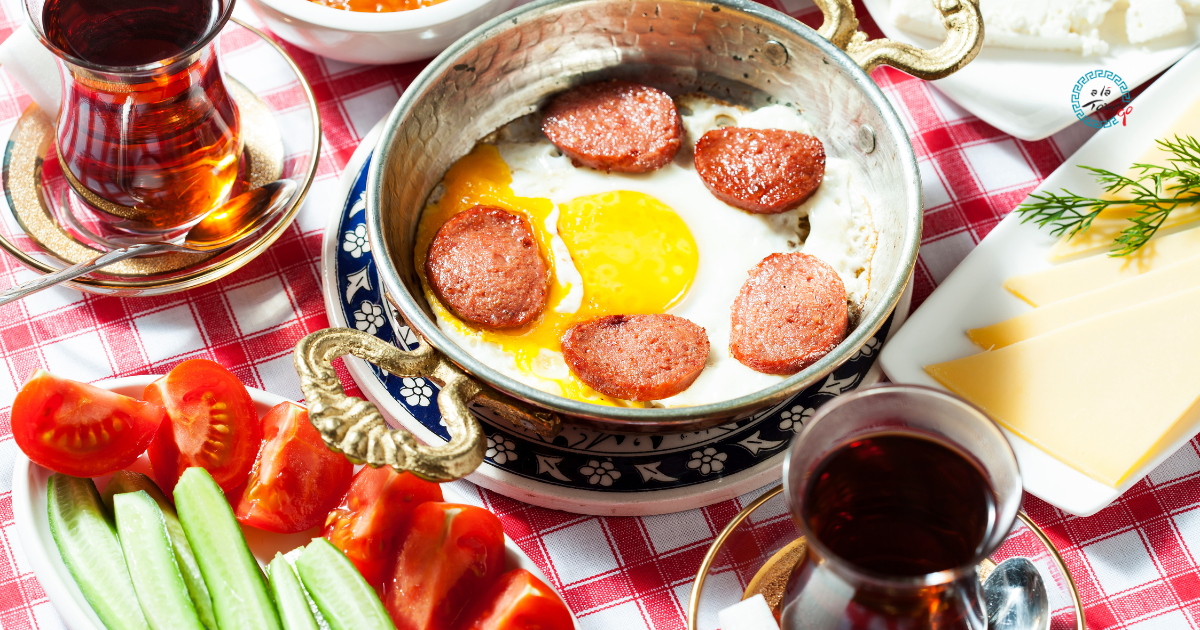
The first time a Turkish breakfast arrives, most visitors assume there has been a mistake. Twenty-odd small plates land on the table at the same time, with no main dish and no obvious order to eat them in, and the waiter walks away.
There is no mistake. This is the meal. The word kahvaltı literally means "under the coffee" — what you eat before the coffee — and it is the one meal Turks genuinely slow down for.
What actually comes to the table
A serpme kahvaltı — a "scattered" breakfast, ordered per person — is typically set with twenty to thirty items. The core is almost always:
- Cheeses: beyaz peynir (the fresh white one), kaşar, tulum, often a herbed cheese
- Olives: black and green, usually two bowls, usually before anything else
- Bal kaymak: honey with clotted buffalo cream. If you try one thing, this
- Eggs: menemen (scrambled with tomato and pepper), sucuklu yumurta (with spiced sausage), or plain fried
- Vegetables: tomato, cucumber, green pepper — raw, sliced, unseasoned
- Jams and butter, usually three or four jams including rose or sour cherry
- Savouries: sigara böreği, poğaça, sometimes fried potatoes
- Bread, brought warm and replaced without being asked
- Tea, poured continuously until you turn your glass over
Coffee and fresh juice are usually charged separately — worth knowing before the bill arrives.
Why it takes three hours
Because nothing on the table gets cold enough to matter, and because the meal is the occasion rather than the fuel. Weekend breakfast with family or friends routinely runs from ten until one. Nobody brings the bill until you ask for it, and the tea keeps coming. If you have a 2pm appointment, say so when you sit down.
On our tours, breakfast is included every morning and runs on hotel time — but if you have a free morning, a long one at a proper kahvaltıcı is a better use of it than most museums.
How the regions differ
This is where it gets interesting, and it is a real reason to eat breakfast somewhere other than your hotel.
- Van: the most famous breakfast in the country. Several kinds of otlu peynir (cheese cured with wild mountain herbs), buffalo kaymak, Van honey, hot tandır bread brought out endlessly, plus murtuğa and kavut — flour-and-butter dishes you will not meet anywhere else. The city has an entire street of breakfast houses, some run by the same family since the 1940s.
- The Black Sea: muhlama (also called kuymak) — cornmeal cooked into melted cheese and butter until it strings. Rich enough to count as the whole meal.
- Gaziantep: katmer, a paper-thin pastry folded around pistachio and clotted cream and baked. Eaten at breakfast, not as dessert, and it is the single best thing on the southeastern route.
- Hatay: zahter (wild thyme with olive oil and sesame) and sürk, a spiced dried curd. The most Levantine table in Turkey.
- Aegean: lighter — more herbs, more olive oil, wild greens in season.
What it costs
A full serpme breakfast is priced per person, and it is one of the best-value meals in the country. Across Turkey the 2026 range runs roughly 455–710 TL per person. By city:
| City | Per person |
|---|---|
| Istanbul | 540–840 TL (Bosphorus views 850–1,400 TL) |
| İzmir | 480–745 TL |
| Antalya | 490–885 TL |
| Ankara | 405–635 TL |
| Diyarbakır | 370–565 TL |
| Van | 280–700 TL |
Two people will not finish one person's portion each. Order for two and share if you are not very hungry — most places are relaxed about it.
Practical notes
- It is almost entirely vegetarian if you skip the sucuk and pastırma. Say "etsiz, lütfen" — without meat.
- Hotel breakfast is not the same thing. Buffets are good but they are buffets. Go out at least once.
- Turn your tea glass upside down on the saucer when you have had enough. Otherwise it keeps arriving, politely and indefinitely.
- Nothing is spicy unless you add the pepper paste yourself.
- Breakfast houses open early and close early — many stop serving around 13:00 or 14:00. This is not a brunch culture that runs to late afternoon.
- Tipping: round up or leave about 10 per cent, as in any restaurant. Our tipping guide covers the rest.
Where to have the good one
In Istanbul, Beşiktaş and Kadıköy have whole streets of breakfast places, and the Bosphorus villages charge a premium for the view. On the road, the best breakfasts are rarely in cities at all — they are at the village places on the way out of town, where the cheese is from the next valley.
If you are travelling east, breakfast is the meal where the regional differences show most clearly. On the Tunceli route and through Mesopotamia, the table changes every two provinces — which is more than you can say for dinner.
Bereit, die Türkei zu erleben?
Begleiten Sie unsere erfahrenen Reiseleiter auf eine unvergessliche Reise zu den schönsten Zielen der Türkei.
Touren entdecken