EN
EN
 TR
TR
 DE
DE

Solo Female Travel in Turkey 2026: Is It Safe and What to Expect?
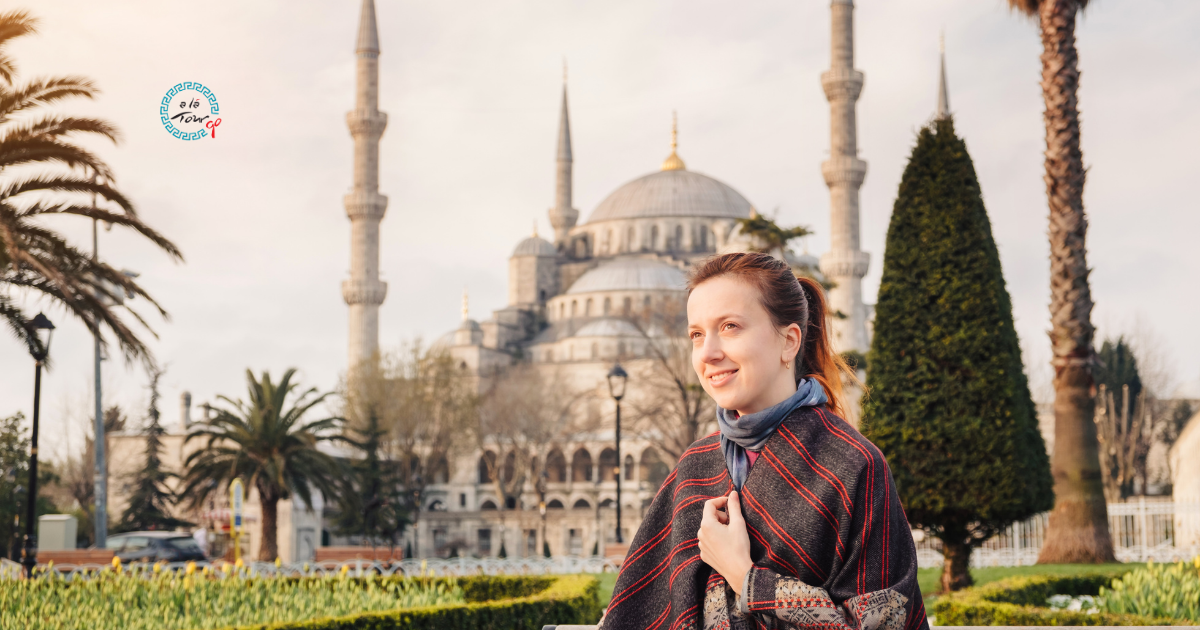
The honest answer is yes — Turkey is safe for solo female travellers. It is not uniquely safe (no destination is), and it requires the same contextual awareness that any solo female travel requires anywhere in the world. But Turkey is visited by millions of solo women each year, including large numbers of solo Western female travellers, and the overwhelming experience is positive.
This guide gives you the actual picture — not reassuring generalities, not alarmist cautions, but the practical reality of travelling Turkey solo as a woman in 2026.
The Honest Safety Picture
Turkey is broadly safe. The State Department, Foreign Office and equivalent agencies rate Turkey as "exercise normal precautions" for most of the country — the same level as much of Southern Europe. Petty crime (pickpocketing, bag snatching) exists in tourist areas at the same level you would expect in Istanbul as in Barcelona or Rome.
The specific challenge for solo female travellers: Harassment is more common in Turkey than in Northern Europe and somewhat more common than in Western Europe. In tourist areas — particularly Istanbul's Sultanahmet district, Cappadocia, the Aegean coast resorts — verbal harassment from touts, shop owners and occasionally other tourists is a reality that many women encounter. It is rarely threatening; it is almost always annoying.
The regional variation is significant: Istanbul and the Aegean coast are broadly similar in comfort level to Mediterranean Europe. Southeastern Turkey (Gaziantep, Mardin, Şanlıurfa) requires a bit more awareness. Eastern Anatolia (Van, Kars, Erzurum) is generally very safe but more culturally conservative — solo Western women will attract more attention simply because they are less commonly seen.
What Actually Works: Practical Advice
Dress
Turkey is a Muslim-majority country with significant internal variation in conservatism. Dress that works in Istanbul may attract unwanted attention in a small southeastern town.
The practical rule:
- In Istanbul, İzmir and coastal tourist areas: dress as you would in Mediterranean Europe — covered shoulders for mosque visits, otherwise normal summer clothing
- In Cappadocia: slightly more conservative than the coast but still relaxed
- In Southeastern Turkey (Gaziantep, Mardin, Şanlıurfa): loose clothing covering shoulders and knees significantly reduces unwanted attention — not required, but makes the experience more comfortable
- In Eastern Anatolia: similar to Southeast; a headscarf is not required but covering up is consistently better received
The headscarf question: Not required anywhere in Turkey for tourists. Necessary to enter mosques — many mosques have scarves available to borrow at the entrance.
Accommodation
Stay in well-reviewed guesthouses and hotels. Solo female travellers consistently recommend:
- Read reviews specifically from other solo female travellers (search TripAdvisor for "solo female" in the reviews section)
- Family-run guesthouses in Cappadocia and smaller towns are often cited as more attentive and safer-feeling than anonymous hotels
- Avoid the cheapest dormitory hostels in Istanbul's backpacker areas — not because they're dangerous, but because the vetting of other guests is less rigorous
Useful practice: Tell the accommodation where you're going and when you expect to be back. This is normal in smaller guesthouses and provides a practical safety net.
Transport
Taxis:
- In Istanbul, always use the BiTaksi or iTaksi apps rather than street-flagged taxis — the app records the journey and driver details
- Agree on meter usage or price before getting in
- Sit in the back seat
- Share your live location with someone when taking longer taxi journeys alone
Intercity buses:
- Turkish intercity buses are generally safe and comfortable
- The seat beside you should not be occupied by a male passenger if single seats are available — drivers and passengers generally follow this convention, but it is fine to request a seat change
Dolmuş (shared minibus):
- Generally safe; sit near the driver if the vehicle is not crowded
Dealing with Harassment
The most common form of harassment in Turkish tourist areas is verbal — "where are you from?", "come look at my shop", "you are very beautiful" — delivered by men hoping to attract tourist business. It is annoying rather than threatening.
What works:
- No eye contact, no response, keep walking. Engaging — even to say no — prolongs the interaction
- "Hayır" (no) said firmly and without breaking stride ends most interactions
- "Evliyim" (I'm married) is not morally required but does end many interactions faster than "I'm not interested" — particularly outside major cities
- If someone follows you: enter a shop, café or restaurant and ask the staff for help. Turkish people are generally protective of women who are being bothered.
The Best Regions for Solo Female Travellers
Most comfortable:
- Istanbul — large, cosmopolitan, tourist infrastructure everywhere; the experience in Beyoğlu and Karaköy is comparable to any European capital
- Cappadocia — small area, well-touristed, family guesthouses, very manageable
- Aegean Coast (İzmir, Fethiye, Kaş) — cosmopolitan, relaxed, used to solo female tourists
Requires slightly more awareness but absolutely doable:
- Southeastern Turkey (Gaziantep, Mardin, Şanlıurfa) — more conservative but also very hospitable; solo female travellers consistently report feeling welcomed once past initial curiosity
- Eastern Anatolia (Kars, Van, Erzurum) — less-visited by solo female travellers, which means more attention; the people are generally very hospitable but the environment is more unfamiliar
The guided tour advantage: Many solo female travellers specifically choose guided small-group tours in Turkey precisely to sidestep the navigation of these dynamics while still experiencing the full country. A guided group provides immediate social context that significantly changes interactions with local vendors and touts.
What Solo Female Travellers Actually Say
The consistent feedback from solo female travellers who have visited Turkey:
- Harassment is real but manageable — it is not at the level that makes Turkey uncomfortable; it is at the level that requires confidence and learned responses
- Turkish hospitality frequently outweighs the difficulties — the kindness of local people, particularly in less-touristed areas, is one of the most commonly cited positive experiences
- Being invited for tea is genuine, not always a prelude — in smaller cities and towns, the invitation for tea from shopkeepers or families is often simply hospitality. Reading the context carefully determines the appropriate response
- Travelling with another woman removes most friction — many solo female travellers find a short-term travel companion (met at a hostel or through travel apps) for specific legs of the journey
Considering a guided tour of Turkey as a solo traveller?
Our small-group tours are suitable for solo travellers — including solo women. Several of our regular solo travellers return year after year.
Reach us via the WhatsApp button on the right side of our website — we respond within 24 hours.
Bereit, die Türkei zu erleben?
Begleiten Sie unsere erfahrenen Reiseleiter auf eine unvergessliche Reise zu den schönsten Zielen der Türkei.
Touren entdecken