EN
EN
 TR
TR
 DE
DE

Pamukkale Beyond the Terraces: 8 Activities Most Visitors Never Try

Most visitors to Pamukkale make the same mistake: they arrive, walk the terraces, take the photograph and leave. The white calcium formations are extraordinary — genuinely unlike anything else on earth. But they are the beginning of what Pamukkale offers, not the entirety of it. The ancient Roman city of Hierapolis spreads across the hilltop above the terraces with a theatre that rivals anything in Turkey. An underground cave 20 kilometres away has its own travertine formations that almost no international visitor has ever seen. Cleopatra herself is said to have swum in a thermal pool here that you can enter today, with Roman columns lying on the floor beneath the water.
This guide covers the 8 activities that turn Pamukkale from a photo stop into a genuine destination.
1. Cleopatra's Antique Pool — Swimming Among Sunken Roman Columns
Why most people miss it: They don't know it exists, or they assume it's too expensive.
The Antique Pool (Antik Havuz) — also called Cleopatra's Pool — is a thermal pool inside the Hierapolis archaeological park where warm mineral water fills a space containing genuine Roman column fragments, capitals and architectural pieces that fell into the pool during an ancient earthquake. You swim among them.
The water is approximately 36°C, rich in carbon dioxide and minerals, and the sensation of floating in warm water with 2,000-year-old marble columns around and beneath you is one of those genuinely surreal experiences that Pamukkale uniquely offers.
Practical:
- Located inside the Hierapolis park, approximately 10 minutes walk from the main terrace entrance
- Entry: approximately €15–20 in addition to the main Hierapolis/Pamukkale site ticket
- Open daily approximately 08:00–19:00
- Swimwear required; lockers and changing rooms available
- Best time: early morning before tour groups arrive — the pool becomes crowded by 10:00–10:30
Pamukkale is included in our Aegean & Western Anatolia tours →
2. Hierapolis — The Roman City That Most People Rush Through
Why most people miss it: They spend all their time on the terraces below and treat Hierapolis as an afterthought.
Hierapolis is one of the finest Roman cities in Turkey — and almost no one gives it the time it deserves. Founded as a spa city in the 2nd century BC, it was home to approximately 100,000 people at its peak. The ruins are extensive, well-preserved and dramatically positioned above the travertine terraces.
What to see in Hierapolis:
The Theatre: Capacity approximately 12,000; the stage facade is one of the finest in Anatolia with marble reliefs of gods and mythological scenes. Climb to the upper tiers for a panoramic view over the travertines below. At sunset the terraces turn golden — the view from the theatre at this moment is one of the best in Turkey.
The Necropolis (Hierapolis Cemetery): The largest ancient cemetery in Anatolia — thousands of tombs, sarcophagi and mausoleums spread across a wide area north of the city. Genuinely eerie and extraordinary. Most visitors walk past it without stopping.
The Martyrium of St Philip: An octagonal early Christian monument believed to mark the site of the Apostle Philip's martyrdom — 5th century AD, remarkably intact for its age. A short walk from the theatre.
The Plutonion: A sacred cave emitting CO2 at concentrations lethal to birds and small animals — still emitting today. Ancient priests used it as a demonstration of divine power. Now fenced but visible and still atmospheric.
Allow: A minimum of 2.5 hours for Hierapolis alone — ideally 3.5 hours.
3. Kaklık Cave — Pamukkale Underground
Why most people miss it: Almost no international tourists have heard of it.
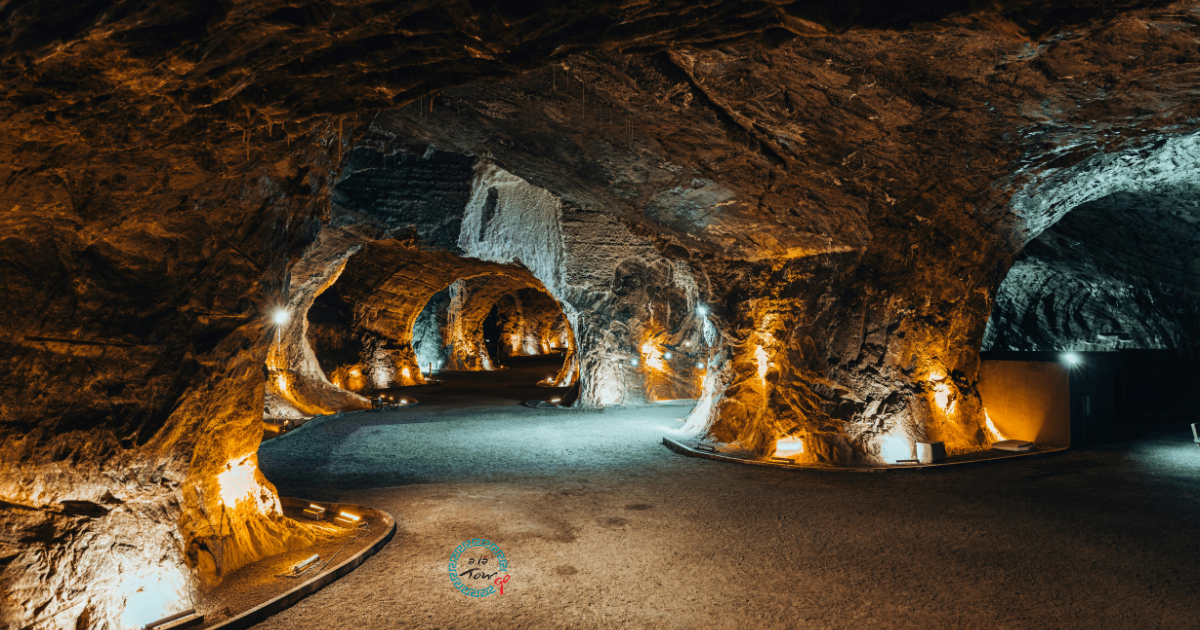
Kaklık Cave (Kaklık Mağarası) is approximately 20 kilometres from Pamukkale and contains its own travertine formations — calcium carbonate deposits almost identical in character to Pamukkale's famous terraces, but formed underground in a cave environment rather than on a hillside.
The cave was only opened to visitors relatively recently and remains almost entirely unknown on the international tourist circuit. The vast majority of visitors have never heard of it — if you have a half-day spare, this underground cave with its own travertine formations is one of the most unusual sites in Turkey. Turkey Travel HQ
What you see: Descend two flights of stairs into a large natural cave where calcium-rich thermal water has created terrace formations, stalactites and pools on the cave floor. The cave is illuminated by natural light through an opening in the ceiling; no artificial lighting is needed.
Practical:
- Location: Kaklık village, approximately 20 km from Pamukkale — car or taxi required
- Entry: approximately €3–5
- Allow: 45–60 minutes
- Best combined with: a half-day that starts at Kaklık and ends at Pamukkale for the late afternoon light on the terraces
4. Paragliding Over the Terraces
Why most people miss it: They don't know paragliding operates here, associating it only with Ölüdeniz.
Paragliding over Pamukkale offers an aerial perspective of the white terraces, the Hierapolis ruins and the Çürüksu Valley that no ground-level visit can replicate. The travertines from above look entirely different from the ground — the full scale of the calcium formations and their relationship to the surrounding landscape becomes clear.
The experience: Tandem paragliding (no experience needed — you fly with an instructor) launching from the hill above Pamukkale, with a flight time of approximately 15–25 minutes depending on conditions.
Practical:
- Multiple operators in Pamukkale village — book direct or through your hotel
- Price: approximately €60–90 per person
- Best time: morning flights for clearest conditions; afternoon winds can be stronger
5. Hot Air Balloon Over Pamukkale
Why most people miss it: They assume balloons are only for Cappadocia.
Pamukkale has its own hot air balloon operation — significantly less crowded than Cappadocia and with a completely different aerial character. The white terraces from above, with the Hierapolis ruins visible and the Menderes River Valley in the distance, are spectacular from balloon altitude.
Practical:
- Several operators based in Pamukkale and Denizli
- Price: approximately €130–200 per person (notably cheaper than Cappadocia's equivalent)
- Flight time: approximately 45–60 minutes
- Best season: March–November; winter can limit availability
6. Karahayıt — The Red Terraces
Why most people miss it: It's 5 kilometres from Pamukkale and most visitors don't know it exists.
Karahayıt is a smaller thermal spring village 5 km north of Pamukkale where iron-rich waters have created travertine formations in shades of rust, orange, red and ochre — completely different in colour character from Pamukkale's white calcium formations. The combination of the two in a single visit is genuinely worthwhile.
Many hotels in Karahayıt pipe the thermal water directly into private pools — staying in Karahayıt rather than Pamukkale village gives you private thermal access without the entrance fee.
Practical:
- 5 km from Pamukkale — dolmuş connection or 10-minute taxi
- The Karahayıt springs themselves are visible from the road and partially accessible without a fee
7. Laodikeia — The Forgotten Ancient City Nearby
Why most people miss it: Nobody tells them it exists.
Laodikeia (Laodikya) is an ancient city 6 kilometres from Pamukkale — one of the Seven Churches of Asia mentioned in the Book of Revelation, a major Roman commercial city famous for textiles and banking. Active excavations are ongoing; new sections are revealed each season.
The site is significantly less visited than Hierapolis and has a completely different atmosphere — wide open excavations with good information boards, an excellent stadium, a large Byzantine church and panoramic views across the fertile plains toward Denizli.
Practical:
- Location: 6 km from Pamukkale on the Denizli road
- Entry: approximately €5–8
- Allow: 1.5–2 hours
- Best combined with: a Pamukkale day that starts at Laodikeia and ends at the Hierapolis sunset
8. Sunrise on the Terraces — Before Anyone Else Arrives
Why most people miss it: They arrive with the tour buses.
The Pamukkale terraces open at sunrise and the first 60–90 minutes of the day are transformative compared to the experience at 10:00 when coaches arrive. The warm morning light on the calcium formations, the mist rising off the pools, the relative silence — this is when Pamukkale delivers its best experience.
Practical:
- Stay at least one night in Pamukkale village rather than doing it as a day trip — this makes a sunrise visit possible without a 02:00 departure
- The terrace path is accessible at first light; go directly to the upper terrace level for the widest view
- Bring a towel — the pools are warm and the early morning light on the travertines while you're standing in thermal water is one of Turkey's genuinely extraordinary moments
How Long Should You Spend at Pamukkale?
| Stay | What you can do |
|---|---|
| Half day (4 hours) | Terraces + Cleopatra's Pool |
| Full day (8 hours) | Above + Hierapolis properly |
| 1 night | Above + sunrise on terraces |
| 2 nights | Above + Kaklık Cave + Laodikeia + Karahayıt |
The honest answer: one night minimum. Pamukkale as a day trip from Antalya or Bodrum produces a rushed experience of one of Turkey's most rewarding sites.
Want to include Pamukkale properly in a guided Turkey tour?
Our Aegean and Western Anatolia tours include a full day at Pamukkale — with time for both the terraces and Hierapolis, and local guide expertise on the sites most visitors miss.
Reach us via the WhatsApp button on the right side of our website — we respond within 24 hours.
Bereit, die Türkei zu erleben?
Begleiten Sie unsere erfahrenen Reiseleiter auf eine unvergessliche Reise zu den schönsten Zielen der Türkei.
Touren entdecken