EN
EN
 TR
TR
 DE
DE

Is Eastern Turkey Safe? An Honest Answer About Van, Mardin and Diyarbakır
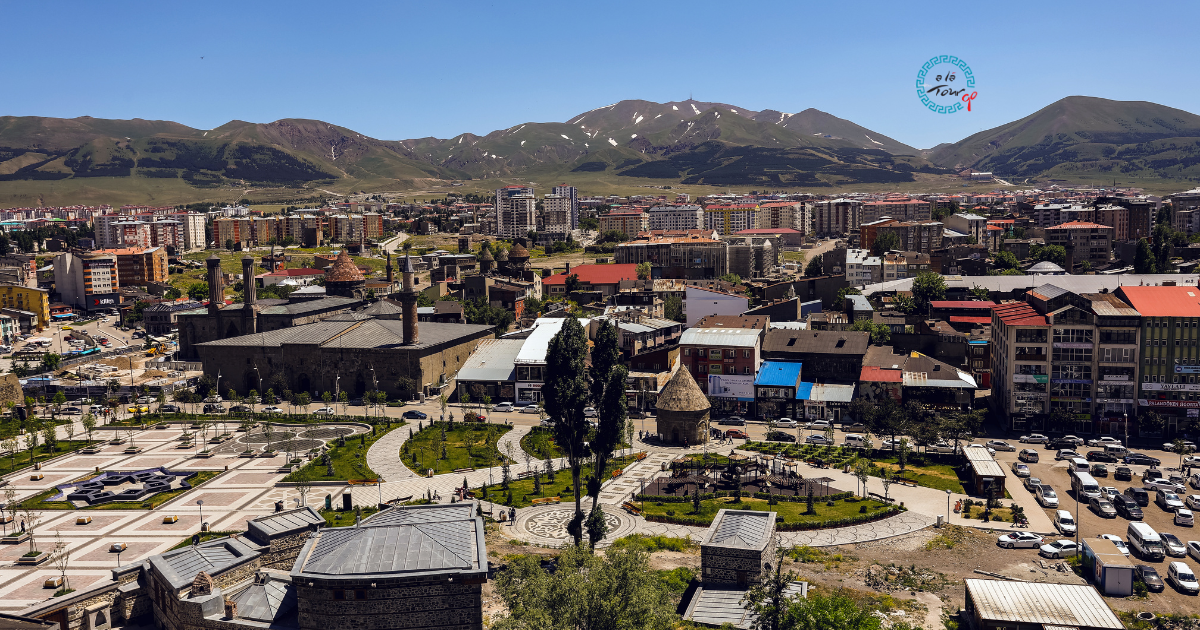
If you have been reading about Göbeklitepe, Mardin or Lake Van and a quiet question has been sitting at the back of your mind, this article is for you. It is a question people rarely type out in full and almost never ask a tour operator directly, because it feels impolite.
Ask it. It deserves a specific answer rather than either a brochure reassurance or a decade-old headline.
The Short Answer
The cities and archaeological sites that draw visitors to eastern and southeastern Turkey — Mardin, Diyarbakır, Şanlıurfa, Göbeklitepe, Midyat, Lake Van, Kars, Ani — are not subject to any blanket travel warning from the British or German governments. People live, work, commute and raise families in these cities. Tourism operates normally.
There is one clear, narrow exception, and it is geographic rather than regional: the strip of land immediately along the Syrian border. That is a real restriction, it is specific, and the rest of this article explains exactly where it falls and why the distinction matters so much.
One caveat before the detail: travel advice changes. Everything below reflects the position at the time of writing, and you should check your own government's current advisory before you book. Links are at the end.
What the Official Advisories Actually Say
This is where most online discussion goes wrong. People read "the Foreign Office warns about southeast Turkey" and picture a region under restriction. The actual wording is far narrower.
The United Kingdom
The FCDO advises against all travel to within 10 km of the Turkey–Syria border. That is the restriction. It is drawn as a distance from a line, not around provinces.
Diyarbakır, Mardin, Van, Şanlıurfa, Batman and Kars are not named as provinces to avoid. Two separate practical rules do apply elsewhere in the east: visiting the border areas of Hakkari province with Iraq and Iran requires permission from the local Governor's Office, and climbing Mount Ararat in Ağrı province requires military permission arranged in advance.
Germany
The German Foreign Office is phrased differently and names provinces, which is why German-language discussion sounds more alarming. It warns of dangers from neighbouring conflicts in "the immediate border region of Turkey with Syria (the provinces of Şanlıurfa and Mardin) and with Iraq", and advises avoiding all non-essential travel to those border areas.
Read the sentence carefully: the restriction is on the border areas, and the provinces are named to locate them. Şanlıurfa and Mardin are not themselves declared off-limits. Germany does not publish a kilometre figure, so travellers from Germany have to apply judgement where the UK has a number.
Germany also gives sensible general advice that is worth following anywhere in the region: avoid large gatherings and demonstrations, avoid military installations, and avoid remote areas and little-used country roads, particularly after dark.
The Geography That Actually Matters
Once you know the restriction is a 10 km band along one border, the map does most of the reassuring. These are approximate straight-line distances to the Syrian border:
| Place | Distance to Syrian border | Inside the restricted band? |
|---|---|---|
| Mardin old city | about 30 km | No |
| Midyat and Mor Gabriel Monastery | about 45 km | No |
| Şanlıurfa city | about 50 km | No |
| Göbeklitepe | about 60 km | No |
| Diyarbakır | more than 150 km | No |
| Lake Van | roughly 400 km | No |
| Kars and Ani | more than 600 km | No |
| Nusaybin (Mardin province) | on the border | Yes — avoid |
| Akçakale (Şanlıurfa province) | on the border | Yes — avoid |
This is the heart of the confusion. Mardin province touches the Syrian border; Mardin city does not. The restricted strip sits at the southern edge of the province around Nusaybin, roughly a forty-minute drive from the old city. Saying "Mardin is restricted" because of that is like saying Kent is restricted because Dover is on the coast.
No normal tourist itinerary in this region goes anywhere near the border. There is nothing there to visit.
What Changed After 2025
The background anxiety most people carry about this region dates from the conflict between the Turkish state and the PKK, which shaped the southeast for four decades and included serious urban fighting in Diyarbakır and other cities in 2015 and 2016.
That context has shifted substantially. In February 2025 the imprisoned PKK leader Abdullah Öcalan called on the organisation to disband and surrender its weapons, and in May 2025 the PKK announced its dissolution. Through 2026 the process moved into implementation: the Turkish government established working groups in August 2026 to oversee disarmament verification, and parliament passed framework legislation on 10 August 2026 — supported by 467 of 592 members voting — conditionally suspending sentences and halting trials for PKK-related offences where disarmament is verified. Öcalan himself and those convicted of intentional killings are excluded from those provisions.
Be precise about what this does and does not mean. Verification of the dissolution was still in progress as this was written, with findings expected at the National Security Council's October 2026 meeting. A political process in its implementation phase is not the same as a completed one.
What it does mean is that the frame of reference most travellers are using — headlines from 2015, or memories from the 1990s — is describing a situation that has moved on considerably. Travel decisions should rest on current advisories, not on either old headlines or optimistic ones.
The Earthquake Question
Many people merge two separate things: "southeastern Turkey" and "the 2023 earthquake zone". They overlap only partly.
The February 2023 earthquakes struck provinces to the west of the Mesopotamian cultural route — Hatay, Kahramanmaraş, Adıyaman, Gaziantep, Malatya among them. Şanlıurfa was affected; Mardin, Diyarbakır's old city, Midyat and the Van region were not damaged in the way those provinces were.
Where it is directly relevant to visitors is Adıyaman, the usual base for Mount Nemrut. Reconstruction there is ongoing and visitors should expect to see it. Tours to Nemrut operate, but if you are travelling in that specific area it is worth asking your operator directly what the current accommodation and road situation is rather than assuming.
Checkpoints: What to Expect and Why They Are Not a Warning Sign
This is the single thing most likely to unsettle a first-time visitor, so it is worth explaining properly.
On intercity roads in the east you will pass jandarma checkpoints — sometimes several in a day. A typical stop lasts two minutes. An officer looks at the vehicle, may ask where you are going, and may ask to see passports. On a tour bus the guide usually handles it and you may not even get off.
Travellers read these as evidence of danger. They are better understood as routine infrastructure: they are part of how movement is managed across a large, sparsely populated border region, and they exist on quiet days exactly as they do on busy ones. Their presence tells you nothing about the risk level that day.
Two practical rules. Carry your passport, not a photocopy, whenever you travel between cities in the east. And do not photograph checkpoints, soldiers or military installations — this applies across Turkey and is taken seriously. Put the phone down well before you reach one.
Where You Genuinely Need Permission
- Hakkari border areas with Iraq and Iran: permission from the Governor's Office. No standard tourist route requires this.
- Mount Ararat: climbing requires a military permit arranged well in advance through a licensed agency. Viewing and photographing Ararat from Doğubayazıt or from the Ishak Pasha Palace road requires nothing at all — the permit is for the ascent.
- Ani: no permission needed. Ani sits on the closed Armenian border, which confuses people, but it is a ticketed, open archaeological site with a car park and a visitor entrance. A closed border is a diplomatic fact, not a security zone.
The Risks That Are Actually Worth Planning For
Having set out what is not the problem, here is what is — because an honest answer includes this part.
- Roads and weather. The genuine recurring risk in eastern Turkey is driving. Distances are long, mountain roads are demanding, and winter closes passes. More visitors have trouble from weather and road conditions than from anything else.
- Altitude and exposure. Much of the east sits above 1,500 m and Erzurum and Kars go higher. Summer sun at altitude and winter cold both catch people out.
- Medical distance. Diyarbakır and Van have large hospitals; rural areas between them do not. If you have a condition that needs quick access to care, build the itinerary with that in mind.
- Demonstrations. Avoid them, as the German advisory recommends. This is standard advice for any country and is easy to follow.
- Petty crime. Worth saying plainly: pickpocketing and tourist scams are markedly less common in the eastern cities than in central Istanbul. The east is not where that risk concentrates.
Women Travelling in the East
A question that deserves its own answer rather than a footnote. The eastern and southeastern cities are socially more conservative than Istanbul or İzmir, and a woman travelling alone will be noticed — more often with curiosity and hospitality than with hostility, though staring is common and tiring.
Practically: dressing more modestly than you would on the Aegean coast reduces attention considerably, intercity travel after dark is best avoided, and a guided or group trip removes most of the friction. Our separate guide to solo female travel in Turkey goes into this in more detail.
How to Decide
Three steps, in order.
One: read your own government's current advisory rather than a forum post or a news headline. Note what it restricts geographically and compare that against your actual itinerary. In almost every case the restricted area and the route you are considering will not overlap at all.
Two: ask your operator for the route in writing — which towns, which roads, where you sleep. A licensed operator will provide this without hesitation. If the answer is vague, that tells you something about the operator rather than about the region.
Three: check your travel insurance. Some policies void cover for areas your government advises against. This is a far more common practical problem than any security incident, and it is entirely avoidable by reading the policy against the advisory.
Our Own Position
We run tours in this region: our Göbeklitepe, Nemrut and Mesopotamia tour and our Lake Van, Ishak Pasha and Ani tour, as a TÜRSAB-licensed operator based in Istanbul. So we have an obvious interest in your answer being yes, and you should weigh what we say accordingly.
What we will say is this: our routes stay well clear of the border zone because everything worth seeing is well clear of it anyway, we travel with licensed guides who know the roads, and we will tell you in advance exactly where you are going. If you want to check a specific itinerary against your government's advisory before committing, send it to us and we will walk through it with you.
If you are weighing up when to come, the region is at its most comfortable in spring and autumn, and the winter case for the southeast is stronger than most people expect — summer heat here passes 40°C.
Official Sources
Check these directly before booking, as advice is updated regularly:
- United Kingdom: FCDO travel advice for Turkey
- Germany: Auswärtiges Amt, Reise- und Sicherheitshinweise Türkei
Frequently Asked Questions
Is Mardin safe to visit?
Mardin city is not covered by any blanket travel warning and tourism operates normally there. The restriction that applies in Mardin province is to the strip along the Syrian border around Nusaybin, roughly 30 km south of the old city and not part of any tourist route.
Is Diyarbakır safe for tourists?
Diyarbakır is not named in the British advisory and sits more than 150 km from the Syrian border. The old city, the walls and the Hevsel Gardens are visited normally. Standard city precautions apply, as in any large city.
Can I visit Göbeklitepe?
Yes. Göbeklitepe is a UNESCO World Heritage Site around 60 km from the Syrian border, outside any restricted area, with a visitor centre and regular access.
Why are there so many military checkpoints?
They are routine traffic and identity controls across a large border region and are present regardless of the day's risk level. Expect a stop of a couple of minutes. Carry your passport and do not photograph them.
Is Lake Van safe?
Van is roughly 400 km from the Syrian border and is not subject to any blanket warning. The practical risks around Lake Van are road and weather related, especially in winter.
Has the conflict in southeastern Turkey ended?
The PKK announced its dissolution in May 2025 and a legal framework for the process passed the Turkish parliament in August 2026, with verification of disarmament ongoing at the time of writing. It is a process in its implementation stage rather than a closed chapter, and travel decisions should rest on current official advisories.
Will my travel insurance cover me?
Check the policy wording against your government's advisory. Many policies exclude areas subject to an "advise against travel" notice. Since standard itineraries in this region fall outside those areas, cover is usually unaffected — but confirm it rather than assume it.
Bereit, die Türkei zu erleben?
Begleiten Sie unsere erfahrenen Reiseleiter auf eine unvergessliche Reise zu den schönsten Zielen der Türkei.
Touren entdecken