EN
EN
 TR
TR
 DE
DE

Gallipoli Travel Guide: Visiting the Battlefields of 1915
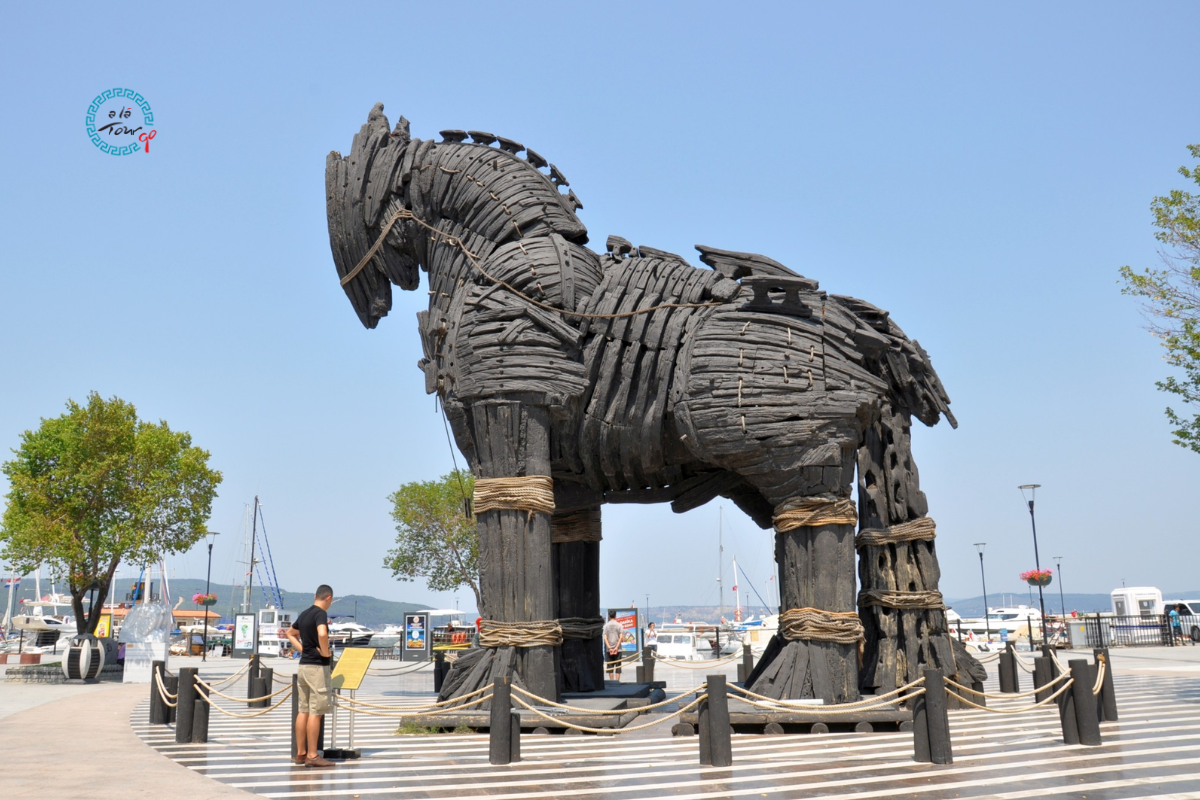
The Gallipoli Peninsula is a narrow strip of land in northwestern Türkiye, between the Dardanelles strait and the Aegean Sea. In the spring of 1915 it became the site of one of the most catastrophic military campaigns of the First World War — an Allied attempt to force the Dardanelles, capture Constantinople and knock the Ottoman Empire out of the war. The campaign lasted nine months. Over 100,000 soldiers died. It achieved none of its objectives. And it left a mark on the national identities of Türkiye, Australia, New Zealand and the United Kingdom that has not faded in over a century.
Today the Gallipoli Peninsula Historical National Park is one of the most carefully preserved and thoughtfully presented battlefield sites in the world. Visiting it is not straightforward — the emotions it generates are complex, the history is layered, and the physical landscape of the fighting is still recognisable in the terrain. But it is one of the most important journeys a traveller can make in Türkiye, and one of the most memorable.
The Campaign: A Brief History
By early 1915, the Western Front in France had settled into the stalemate of trench warfare. The British First Lord of the Admiralty, Winston Churchill, proposed a solution: force the Dardanelles strait with naval power, sail to Constantinople, force the Ottomans out of the war and open a supply route to Russia. In February 1915 a naval bombardment of the Ottoman forts guarding the strait failed. In March a larger naval assault was repulsed with heavy losses. The decision was then made to land troops on the Gallipoli Peninsula and take the forts from the land side.
On 25 April 1915, British and French forces landed at Cape Helles on the southern tip of the peninsula. Simultaneously, the Australian and New Zealand Army Corps — the ANZACs — landed on the western coast at a small beach below steep cliffs, approximately two kilometres north of their intended landing point. The terrain was immediately hostile: the cliffs above the beach were held by Ottoman forces commanded by Colonel Mustafa Kemal — the future founder of the Turkish Republic — who had correctly anticipated the landing area and positioned his forces accordingly.
The campaign that followed was nine months of brutal trench warfare on a peninsula where the front lines were sometimes separated by fewer than ten metres. The Allies never achieved their objectives. By January 1916 the decision was made to evacuate — the only genuinely successful operation of the entire campaign. Of the approximately 500,000 Allied troops who served on Gallipoli, around 56,000 died. Ottoman casualties were comparable or higher — estimates range from 56,000 to 87,000 dead.
What to See: The Key Sites
ANZAC Cove is where the Australian and New Zealand forces came ashore at dawn on 25 April 1915. It is a small beach — barely 600 metres long — hemmed in by steep cliffs on both sides. Standing on the beach and looking up at the ridges above makes the immediate tactical problem of the landing viscerally clear: the men who came ashore here had nowhere to go but up, into withering fire from defenders who held every piece of high ground. The beach is quiet now, lined with simple memorials, and the water is extraordinarily clear. It is one of those places where the gap between the historical event and the present moment feels very thin.
Lone Pine Cemetery and Memorial stands on the plateau above ANZAC Cove, on the site of one of the most intense actions of the campaign — a battle in August 1915 in which Australian forces captured and held a section of Ottoman trenches in three days of close combat that cost both sides thousands of casualties. The cemetery contains 1,167 graves; the memorial panels record the names of 3,268 Australian and New Zealand soldiers who have no known grave. The lone Aleppo pine that gives the site its name — grown from a cone brought back to Australia and later returned — stands at the entrance.
Chunuk Bair (Conk Bayiri) was the high ground the ANZAC forces were trying to reach throughout the campaign. It was briefly captured by New Zealand forces in August 1915 — the only time the Allies held any of the commanding heights of the peninsula — before being retaken by Ottoman forces led personally by Mustafa Kemal. The New Zealand memorial here is one of the most powerful on the peninsula: a simple stone wall inscribed with the names of those who fell, looking out over the strait and the sea.
The 57th Regiment Memorial marks the position of the Ottoman regiment that bore the brunt of the first ANZAC assault. Mustafa Kemal's order to the regiment on 25 April 1915 — "I am not ordering you to attack. I am ordering you to die. In the time that passes until we die, other troops and commanders can come forward and take our places" — is one of the most quoted military commands in history. The regiment was effectively destroyed in holding the line. All of its members are commemorated here.
The Çanakkale Martyrs' Memorial stands at the southern tip of the peninsula at Cape Helles, on the site of the British and French landings. It is the largest monument on Gallipoli — four massive columns supporting a capstone, visible from the sea — and commemorates the approximately 253,000 Ottoman soldiers who died in the Dardanelles campaign. The scale of the monument is calibrated to the scale of the loss.
The Kabatepe Museum at the entrance to the ANZAC sector provides the best overall context for the campaign — maps, artefacts, photographs and personal accounts from both sides that give the full picture before visiting the individual sites.
25 April: ANZAC Day
ANZAC Day — 25 April — is the most significant date in the Australian and New Zealand military calendar, commemorating the landing of 1915. The dawn service at ANZAC Cove, held every year since the 1980s, draws thousands of Australian, New Zealand, Turkish and international visitors for a ceremony that begins in darkness and ends at sunrise. It is an extraordinary event — deeply moving, carefully organised and attended by people who have often travelled specifically for this single occasion. Accommodation in the region books out months in advance for this date.
Atatürk's Message to the ANZACs
In 1934, Mustafa Kemal Atatürk — by then the founder and president of the Turkish Republic — addressed the mothers of the Allied soldiers buried on Gallipoli in a message that has become one of the most quoted acts of reconciliation in modern history. A version of it is inscribed on memorials in Australia, New Zealand and at ANZAC Cove itself. It begins: "Those heroes that shed their blood and lost their lives... you are now lying in the soil of a friendly country." The full text is worth reading before any visit to the peninsula.
Practical Information
The Gallipoli Peninsula is located in the Çanakkale province of northwestern Türkiye, approximately 300 kilometres southwest of Istanbul. The nearest town is Eceabat, on the European shore of the Dardanelles strait, a short ferry ride from Çanakkale city. Most visitors base themselves in Çanakkale and take day trips to the peninsula by ferry and bus or on organised tours.
The distances between the main sites on the peninsula are too large to cover comfortably on foot — a vehicle or organised tour is necessary. The terrain is hilly and the paths between memorials are uneven; comfortable walking shoes are essential. The sites are open year-round, but spring and autumn offer the most comfortable visiting conditions. Summer can be hot and crowded; the ANZAC Day period in late April requires advance planning for accommodation.
A guided visit makes a significant difference at Gallipoli. The physical landscape is largely unmarked — knowing which ridge was Chunuk Bair, which gully was Shrapnel Valley, where the opposing trenches ran — requires explanation to give the terrain its meaning. Our Gallipoli, Troy & Ottoman Heartland Tour includes a full day on the peninsula with an expert guide, combined with Troy, Edirne, Bursa and İznik.
Ready to visit the peninsula? See our Gallipoli tour with expert guides →
Bereit, die Türkei zu erleben?
Begleiten Sie unsere erfahrenen Reiseleiter auf eine unvergessliche Reise zu den schönsten Zielen der Türkei.
Touren entdecken