EN
 TR
 DE

The Whirling Dervishes of Konya: What the Ceremony Actually Is
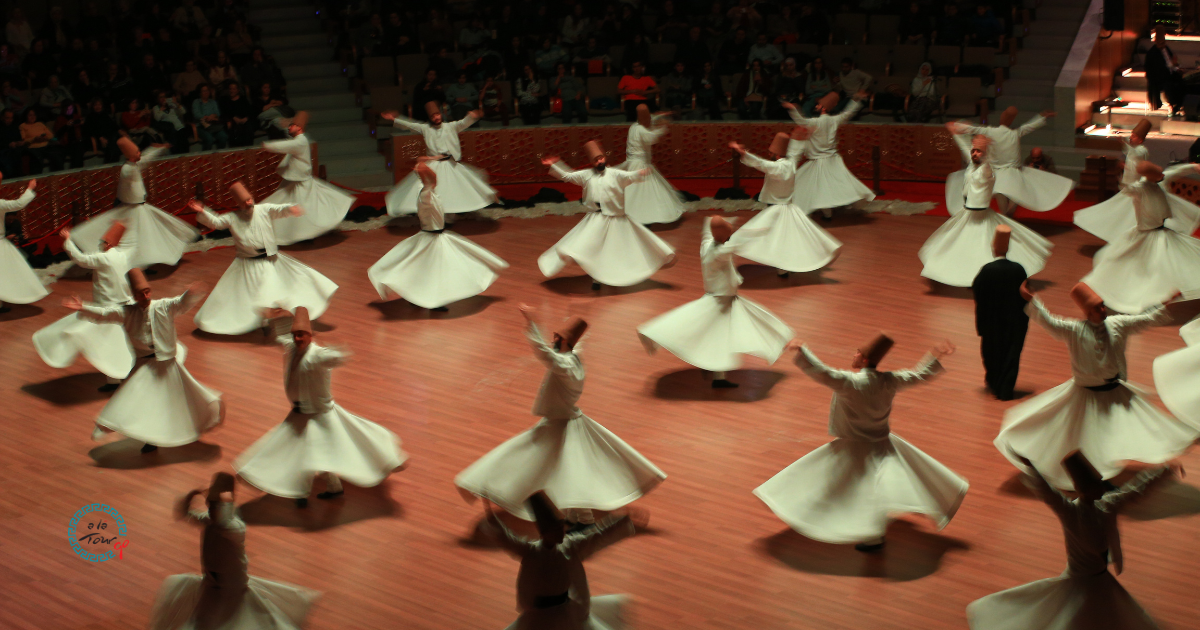
Almost every photograph of Turkey's whirling dervishes is taken at a dinner show. Twenty minutes of spinning between the mezze and the dessert, applause at the end, a bill on the table. That is not what the ceremony is, and if it is the only version you see, you will have missed the thing entirely.
The sema is a form of worship. It has a fixed liturgy, it takes about an hour, and it has been performed in more or less the same shape since the thirteenth century. UNESCO added the Mevlevi sema ceremony to its list of intangible cultural heritage in 2008, which tells you something about how carefully it has been preserved and how easily it could have been lost.
Where it comes from
Mevlânâ Celâleddin Rumi, the Persian-language poet and mystic, spent most of his life in Konya and died there on 17 December 1273. He called death the night of union, şeb-i arûs, the wedding with God, which is why the anniversary of his death is celebrated rather than mourned. The Mevlevi order was organised after his death by his son, and Konya has been its centre ever since.
The order's lodges were closed in 1925 along with all Sufi institutions in the new Republic. The ceremony survived privately, then returned publicly from the 1950s onward, officially as a cultural rather than religious event. That legal fiction is why you can buy a ticket to something that is, for the people performing it, a prayer.
What the clothes mean
Nothing the dervish wears is decorative. Every piece is a statement about death and rebirth.
| Sikke | The tall camel-hair hat represents the tombstone of the ego |
|---|---|
| Tennure | The white skirt represents the shroud |
| Hırka | The black cloak represents the tomb itself, and worldly attachment |
At the start of the whirling the dervish takes off the black cloak. He is stepping out of the grave. That single gesture is the hinge of the whole ceremony, and if you do not know what it means it looks like someone taking off a coat.
What happens, in order
The ceremony follows a fixed sequence. Knowing it turns an hour of unfamiliar music into something you can follow.
1. The eulogy
A soloist chants the naat-ı şerif, a praise of the Prophet Muhammad. Nobody moves. This is the longest stretch of stillness in the ceremony and the part most visitors mistake for a delay.
2. The drum
A single stroke on the kudüm drum stands for the divine command that created the universe.
3. The reed
An improvised solo on the ney, the reed flute. Rumi's great poem opens with the reed crying because it has been cut from the reed bed, separated from its source, which is the condition of every soul. The ney is not background music; it is the thesis.
4. The circling
The dervishes walk three times around the floor, bowing to each other as they pass. Each circuit is a stage of knowledge: hearing of the truth, seeing it, becoming it.
5. The four selams
Then the whirling, in four sections. The first is the recognition of one's own condition; the second, awe at the order of creation; the third, the dissolving of the self in love; the fourth, the return, carrying what was found back into ordinary life and service. The fourth is the shortest, and it is the point of the other three.
The posture never changes: right palm turned up to receive from heaven, left palm turned down to pass it on to the earth, head tilted, turning counterclockwise around the heart. The dervish is a channel, not a performer.
The ceremony ends with a recitation from the Quran and a prayer. Traditionally there is no applause.
Where to see a real one
Konya
Konya is the place to do this properly. The Mevlâna Museum, built around Rumi's tomb under its famous turquoise fluted dome, is the heart of the city and still functions as a place of pilgrimage as much as a museum; you will see people praying beside you. Sema ceremonies are normally held at the Mevlâna Cultural Center nearby, usually on Saturday evenings and usually without a ticket charge. Schedules do shift, so confirm with your hotel or the centre before you build an evening around it.
Konya is a stop on our Cappadocia and Central Anatolia Tour, which pairs it with Cappadocia, Aksaray and Ankara over eight days. Konya is also a straightforward day trip by high-speed train from Ankara or Istanbul if you would rather go independently.
The December commemoration
Every year from 7 to 17 December, Konya holds the Şeb-i Arûs commemoration, closing on the night of the 17th, the anniversary of Rumi's death. It is the most significant sema of the year and it fills the city. Tickets are sold online in advance through the official channels and the hotels book out months ahead. If you want to see this one, plan it like you would plan a flight, not like an evening out.
Istanbul
If Konya is not on your route, Istanbul has genuine options. The Galata Mevlevi Lodge is a restored dervish lodge and museum that still hosts ceremonies in its original wooden sema hall, and there are regular ceremonies at Sirkeci station's dedicated hall. Both are ticketed and both keep the full liturgy. Dates vary by season, so check the current schedule rather than turning up hopefully.
How to tell a ceremony from a show
- Length. A real sema runs roughly an hour. Twenty minutes means it has been cut for an audience.
- Food. Nobody eats during worship. If dinner is involved, it is a show.
- Belly dancing on the same bill. This happens, and it tells you exactly what you have bought.
- Applause. If the venue encourages clapping at the end, it is staging a performance.
Shows are not a scandal and some are beautifully done. Just know which one you are buying a ticket for.
How to behave
Dress as you would for a mosque: shoulders and knees covered, and a scarf for women if the venue is a working lodge. Arrive early and stay until the closing prayer, because walking out mid-ceremony is the one thing that genuinely offends. Keep your phone silent and your flash off; most venues allow photography without flash, but watch what everyone else is doing first. Do not applaud unless your hosts do. And do not talk during the ney solo, however long it feels.
The same instincts that work in any Turkish religious space work here, and we go through those in more detail in our guide to Turkish etiquette.
Watched as a spectacle, the sema is a man in a white skirt spinning for an hour. Watched with any idea of what the skirt, the hat and the four selams mean, it is one of the most sustained acts of public devotion anywhere in the world, and Konya is where to see it.
Ready to Experience Türkiye?
Let our expert guides take you on an unforgettable journey across Türkiye's most stunning destinations.
Explore Our Tours