EN
 TR
 DE

Uzungöl Travel Guide: Türkiye's Most Beautiful Mountain Lake
Uzungöl — "long lake" in Turkish — sits in a valley in the Pontic Mountains south of Trabzon at an altitude of 1,090 metres. The lake itself is small: roughly a kilometre long and a few hundred metres wide, its surface reflecting the spruce forest and the mountains on all sides. In the early morning, when mist rises from the water and the surrounding peaks are obscured by cloud, it looks like a scene from a fairy tale. It is the most photographed location on Türkiye's eastern Black Sea coast and one of the most photographed natural sites in the country — and it has earned that reputation.
But Uzungöl is more than a single view. The valley around it, the mountain plateaus above it at 2,000 metres, the tea country between it and Trabzon, and the broader landscape of the eastern Black Sea highlands make this a base for a region that rewards exploration in every direction.
The Lake and the Village
The village of Uzungöl has grown significantly in the past two decades in response to tourism — primarily from the Arab world, where the lake's image circulates widely on social media, and from Türkiye's own domestic tourism. The main street along the lake's edge is lined with hotels, restaurants and shops. This development is visible and, in the high season, busy. But the lake itself retains its essential quality: the water is cold and clear, the forest comes down to the water's edge, and on any morning before the day-trippers arrive the setting is peaceful and genuinely beautiful.
The wooden mosque at the edge of the lake — built in the traditional Black Sea style with a distinctive pointed minaret — is the most photographed structure in the valley, its reflection visible in the still water on calm mornings. The surrounding hills offer easy walking routes that quickly leave the village behind and enter the forest.
Karaster and Lustra Plateaus
Above Uzungöl, a minibus road climbs to the Karaster and Lustra plateaus at approximately 2,000 metres. This is where the real Black Sea highland life is visible: traditional yaylalar (summer pasture settlements) of wooden houses, cattle grazing on open grassland, and views that on clear days extend to the Black Sea coast far below. The plateaus are also used as a paragliding launch point — the valley below makes for a dramatic landing zone.
The vegetation changes completely as you climb from the valley: the dense spruce forest gives way to open grassland and wildflowers, the air becomes noticeably cooler and cleaner, and the soundscape shifts from the river in the valley to wind across open ground. It is a different world from the tourist village below, and it takes about 20 minutes by minibus to reach.
The Road from Trabzon: Tea Country
The drive from Trabzon to Uzungöl — approximately 99 kilometres, taking around 1 hour 45 minutes — passes through the heart of Türkiye's tea-growing region. The Rize province produces almost all of the tea consumed in Türkiye — the world's fifth-largest tea consumer per capita — and the hillsides between the coast and the mountains are terraced with the distinctive low-trimmed tea bushes that give this landscape its character. The best time to see the harvest in action is late May and early June, when the first and most prized flush of leaves is picked by hand.
A visit to a tea factory in Rize — included in our Black Sea tour — shows the full process from leaf to glass and provides context for the cups of tea that will accompany every meal and every conversation throughout the region.
The Fırtına Valley
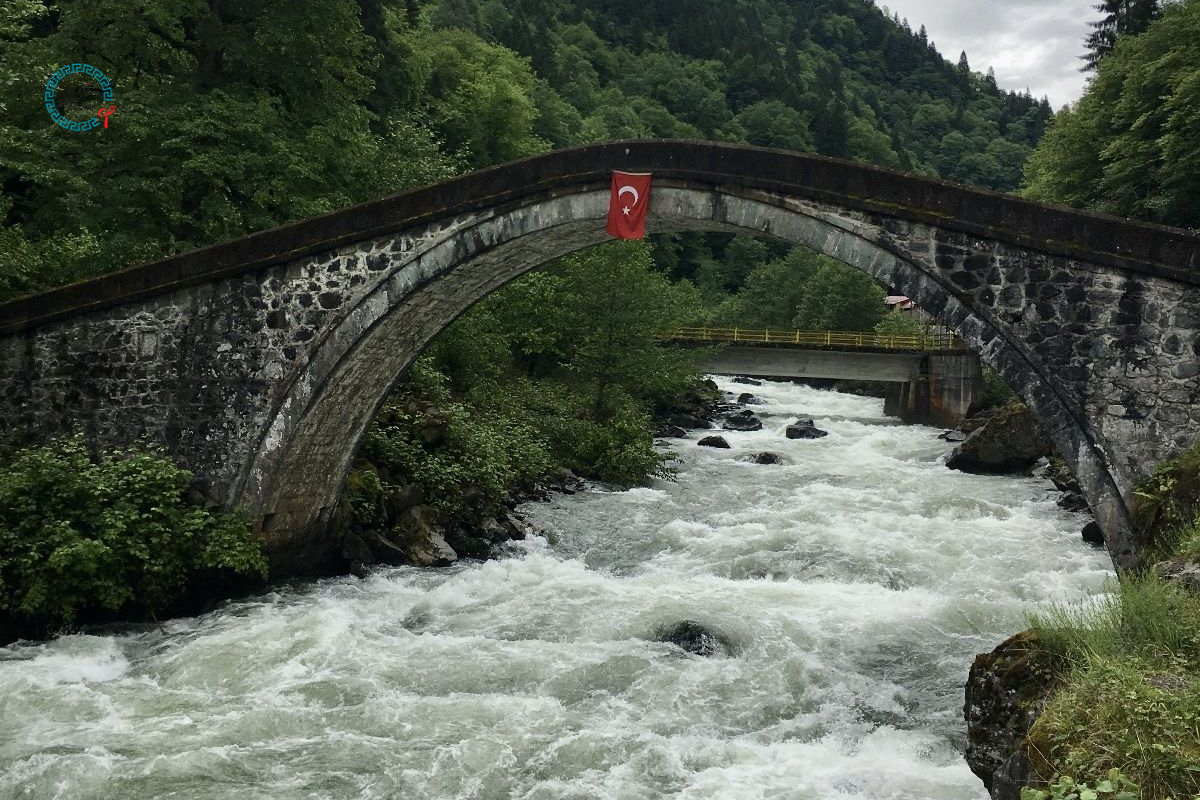
West of Uzungöl, the Fırtına (Storm) Valley is one of the 50 global biodiversity hotspots — a deep river gorge in the Kaçkar Mountains whose old-growth forest contains some of the largest and oldest trees in Türkiye. The valley road follows the Fırtına River through small villages and past Ottoman stone bridges to Çamlıhemşin, the gateway to the Kaçkar highlands.
The film Bal (Honey) — winner of the Golden Bear at the 2010 Berlin International Film Festival — was shot in this valley. Its images of a beekeeper working in the forest canopy and a small boy navigating the misty landscape have introduced the eastern Black Sea to an international audience that might otherwise never have encountered it.
Zil Castle, perched on a cliff 100 metres above the valley, offers views down the Fırtına gorge and across to the peaks of the Kaçkar range. Palovit Waterfall, reached by a forest path, is the widest waterfall in the region — its pool cold enough to stop you in your tracks even in August.
Ayder Plateau
Ayder is the most developed of the Kaçkar plateaus — at 1,350 metres, accessible by road, with hotels, restaurants and natural hot spring baths fed by thermal water from the mountains above. The Gelintülü Waterfall drops into the valley just below the plateau. In summer the meadows are full of wildflowers and the air carries the smell of pine and mountain grass. In winter the plateau is covered in snow and largely quiet — a completely different experience of the same landscape.
Why Uzungöl Matters to the Diaspora
A significant proportion of visitors to Uzungöl and the eastern Black Sea come from Germany, the Netherlands, Belgium and other European countries — specifically from the Turkish diaspora communities whose families originally came from this region. For these visitors, Uzungöl and the surrounding valleys are not simply a tourist destination but a place of personal and family significance: the landscape their grandparents described, the food their mothers cooked, the dialect their families still speak. This dimension of the visit gives the region a warmth and emotional depth that is palpable even for those without that connection.
Practical Information
Uzungöl is located approximately 99 kilometres south of Trabzon. The nearest airport is Trabzon, with direct flights from Istanbul, Ankara and several European cities. From Trabzon, the drive to Uzungöl takes approximately 1 hour 45 minutes on a mountain road that is scenic but requires careful driving — particularly in rain or mist, both of which are common. Minibus services run from Trabzon to Uzungöl in summer.
Accommodation in the village ranges from simple guesthouses to well-appointed wooden hotels with lake views. The best rooms book quickly in the peak summer months and during public holidays — advance reservation is recommended. The village is quietest and most atmospheric in the early morning and evening, after the day-trippers have left.
The best time to visit is May through October. Spring brings wildflowers and the freshest tea harvest. Autumn colours the forest in reds and golds. Winter is cold and can be snowy — beautiful but requiring appropriate preparation. The lake is at its most atmospheric in misty conditions, which are most common in spring and autumn.
Uzungöl is the heart of our Uzungöl, Sümela & Black Sea Highlands Tour — two nights at the lake combined with Sümela Monastery, the Fırtına Valley, Ayder Plateau and the full eastern Black Sea coast from Samsun to the Georgian border.
Ready to see the mountain lake? See our Black Sea Highlands tour with expert guides →
Ready to Experience Türkiye?
Let our expert guides take you on an unforgettable journey across Türkiye's most stunning destinations.
Explore Our Tours