EN
EN
 TR
TR
 DE
DE

Göbeklitepe: Everything You Need to Know About the World's Oldest Temple
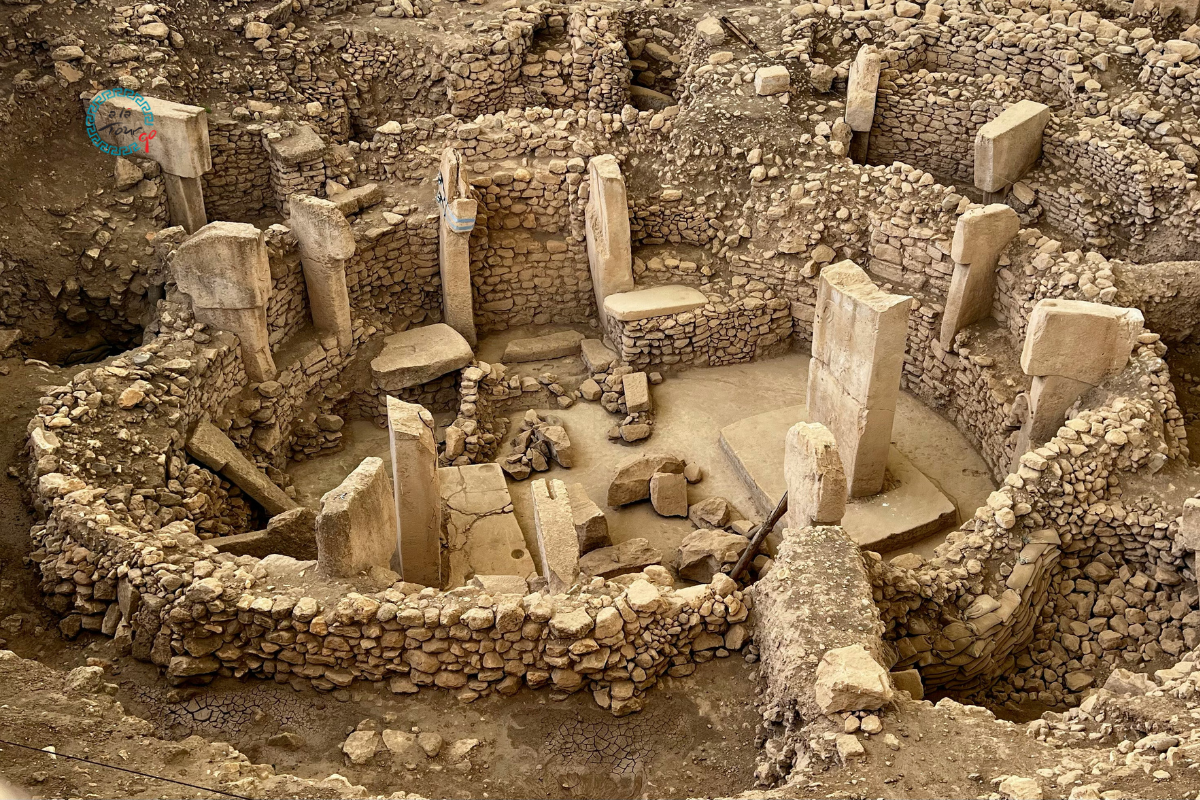
In 1994, a Kurdish shepherd noticed some unusual stones protruding from a hillside near Şanlıurfa in southeastern Türkiye. What followed was one of the most significant archaeological discoveries in human history. Göbeklitepe — the name means "potbelly hill" in Turkish — turned out to be a temple complex built approximately 12,000 years ago, during the Neolithic period, by people who had no writing, no pottery, no metal tools and — as far as we previously understood — no organised religion or social complexity of any kind.
Everything we thought we knew about the origins of civilisation had to be reconsidered.
Why Göbeklitepe Matters
Before Göbeklitepe was excavated, the accepted sequence of human development went roughly like this: first came agriculture and settled life, then came religion and monumental architecture. Göbeklitepe reversed this. The people who built it were hunter-gatherers — nomadic, pre-agricultural, living in small bands. Yet they quarried, shaped and erected T-shaped limestone pillars weighing up to 20 tonnes, carved them with extraordinary animal reliefs, and organised a construction project that required the coordination of hundreds of people over generations.
The site predates Stonehenge by 6,000 years and the Egyptian pyramids by 7,000. It is the oldest known example of monumental religious architecture on Earth. Some archaeologists have gone further: the concentration of food animals depicted on the pillars, and the presence of large quantities of wild grain in the surrounding area, has led to the hypothesis that the religious activity at Göbeklitepe may have been the catalyst for the development of agriculture in the Fertile Crescent — that the need to feed the workers who built the temple is what caused humans to begin farming. If correct, this makes Göbeklitepe not just the oldest temple, but the origin point of the agricultural revolution that underpins all of human civilisation.
What You Will See at the Site
The excavated area covers a fraction of the total site — ground-penetrating radar surveys have revealed that only about 5% of Göbeklitepe has been uncovered. What is visible includes four main enclosures, each containing pairs of tall central T-shaped pillars surrounded by smaller ones arranged in a circle. The central pillars — some over 5 metres tall — are carved with stylised human arms and hands at their sides, suggesting they represent anthropomorphic beings rather than purely abstract forms.
The animal reliefs are the most immediately striking feature: foxes, boars, snakes, cranes, ducks, aurochs, gazelles and spiders cover the surfaces of the pillars in carvings of considerable skill. The variety and quality of the iconography suggests a complex symbolic system — a mythology, effectively — that we do not yet understand.
The site is now covered by a large protective canopy that allows year-round visits regardless of weather. Walkways guide visitors around and above the excavations. An on-site museum provides context and houses smaller finds. The visitor experience is well organised and the scale of the discovery becomes apparent quickly once you are standing above the enclosures and looking down at the pillars.
Göbeklitepe and Şanlıurfa
Göbeklitepe is located 15 kilometres northeast of Şanlıurfa — a city that carries considerable historical and spiritual weight of its own. Şanlıurfa is believed to be the birthplace of the Prophet Abraham, and the sacred Balıklıgöl pool at its centre draws pilgrims from across the Islamic world. The Şanlıurfa Archaeology Museum, one of the finest in Türkiye, houses the finds from Göbeklitepe excavations including the Urfa Man — a life-size human statue dated to approximately 10,000 BC, the oldest known naturalistic human sculpture in existence.
The combination of Göbeklitepe, Şanlıurfa and the surrounding sites — Harran, Karahan Tepe (a related Neolithic site currently under excavation), and the broader Taş Tepeler project uncovering multiple similar sites in the region — makes this one of the most extraordinary concentrations of prehistoric archaeology anywhere on Earth.
Karahan Tepe: The New Discovery
Göbeklitepe is no longer the only site of its kind. Karahan Tepe, 46 kilometres to the southeast, was announced to the public in 2021 and has since revealed stone pillars, carved human figures and architectural features that appear to be contemporary with or even older than Göbeklitepe. Unlike Göbeklitepe, Karahan Tepe contains pillars carved directly into the bedrock rather than erected individually, and the human figures found there are more explicit and naturalistic. Excavations are ongoing and the site is now open to visitors.
The Turkish Ministry of Culture and Tourism has designated the entire region as the Taş Tepeler (Stone Hills) project area, and new Neolithic sites continue to be identified. What began as a single remarkable discovery is now understood to be evidence of a regional civilisation that is only beginning to be mapped.
Practical Information
Göbeklitepe is open every day and accessible by road from Şanlıurfa in approximately 30 minutes. The site is best visited in the morning or late afternoon — the canopy provides shade but the surrounding landscape is exposed. Comfortable walking shoes are recommended as the site involves significant walking on uneven ground. A guided visit adds considerable depth to the experience: the iconographic and archaeological detail visible in the carvings requires explanation to be fully appreciated.
The most effective way to visit Göbeklitepe is as part of a broader tour of southeastern Türkiye that also includes Şanlıurfa, Harran, Mardin and the Mesopotamian heritage sites to the east. Our Göbeklitepe, Nemrut & Mesopotamia Tour combines the site with eight days of the most historically significant region in the country.
How to Get There
The nearest airport is Şanlıurfa GAP Airport, with direct flights from Istanbul, Ankara and other major Turkish cities. From the airport, Göbeklitepe is approximately 45 minutes by road. Şanlıurfa city centre is the logical base — it has good hotel infrastructure and the Archaeology Museum is essential context for the site visit.
Independent visitors can reach the site by taxi from Şanlıurfa or by joining a local tour. The site itself has a visitor centre, café and museum shop at the entrance.
Ready to stand where history began? See our Göbeklitepe tour with expert guides →
Ready to Experience Türkiye?
Let our expert guides take you on an unforgettable journey across Türkiye's most stunning destinations.
Explore Our Tours