EN
 TR
 DE

Safranbolu, Amasra & Black Sea Coast: The Complete 8-Day Guide
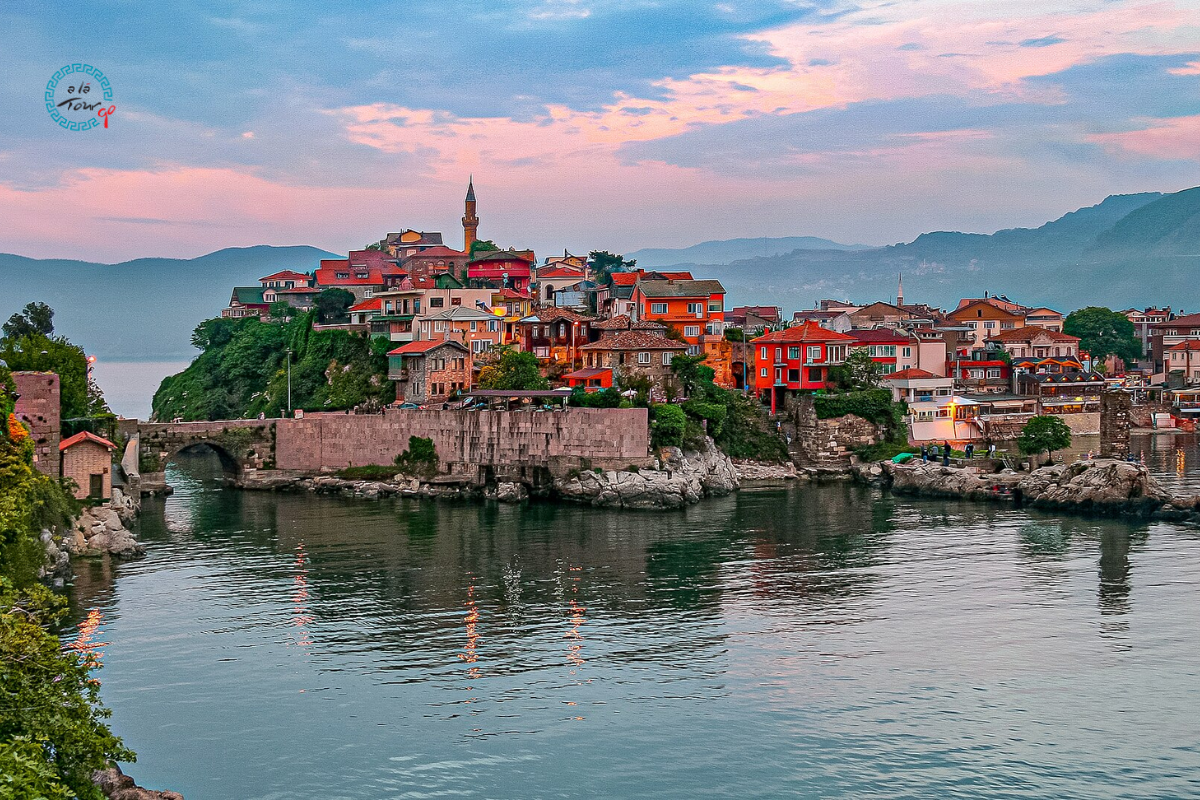
Türkiye's Black Sea coast and its inland valleys form one of the country's least-visited and most rewarding touring circuits. This is the region of timber-framed Ottoman mansions, Genoese harbour fortresses, Pontiac kings buried in cliff-face tombs, and medieval caravanserais still standing on the old trade routes between Istanbul and the east. Over eight days, the tour moves from İzmit through Zonguldak, Amasra, Safranbolu, Kastamonu, Amasya and Tokat — a sweep through the northern arc of Anatolia that most visitors to Türkiye never consider. Our Safranbolu, Amasra & Black Sea Coast Tour is for those who want the full picture.
Day 1: İzmit & Sapanca — The Eastern Marmara Gateway
The tour begins at Istanbul Airport and heads east along the Marmara shore to İzmit — ancient Nicomedia, capital of the Eastern Roman Empire before Constantinople, and the city where Emperor Diocletian issued the Edict on Maximum Prices in 301 AD. The Kasr-ı Hümayun Palace Museum and the Clock Tower mark the centre, and the Ethnography Museum houses a collection of local craft and costume that sets the tone for the week ahead. Sapanca, on the lake of the same name, provides a quiet first night before the coast road begins.
Day 2: Zonguldak — Coal Country & the Black Sea Shore
The road north passes through Sakarya and the ancient city of Prusias ad Hypium — a Bithynian settlement whose theatre and city walls survive in the fields outside the modern village of Konuralp. Ereğli (ancient Heracleia Pontica) was the city from which Jason and the Argonauts were said to have departed in search of the Golden Fleece, and its rocky Black Sea shore carries that mythological weight.
Zonguldak is Türkiye's coal capital — the only significant coal-mining region in the country, its history inseparable from the industry that built it. The Mining Museum tells that story with more honesty than most industrial museums manage. The Varagel Tunnel, the lighthouse and the Kömürcü Monument to the miners round out a day that shows a completely different face of the country.
Day 3: Amasra — The Genoese Jewel of the Black Sea
Amasra is a small peninsula town that has been continuously occupied since antiquity and looks it — Byzantine walls, Genoese towers, a Roman-era harbour and Ottoman houses all stacked together on a headland jutting into the Black Sea. The Genoese coats of arms are still carved into the city gates. The ancient harbour, sheltered between the peninsula and a small island connected by a Roman bridge, is one of the most photogenic spots on the entire Turkish coast.
The Amasra Museum, housed in a former Byzantine church, displays finds from the surrounding excavations. The Amastris Hamam, the Inner Gate and the Kemere Bridge complete a walking tour that takes perhaps two hours but covers two thousand years. The afternoon continues inland to Safranbolu.
Day 4: Safranbolu — The UNESCO Ottoman Town
Safranbolu is a UNESCO World Heritage Site and one of the best-preserved Ottoman towns anywhere in the world. The old quarter — Çarşı — contains over a thousand traditional timber-framed mansions built between the 17th and 19th centuries, their overhanging upper floors shading the cobblestone lanes below. The Cinci Inn, built in 1645, is one of the largest surviving Ottoman caravanserais in the country, its courtyard and hamam still intact.
The Glass Terrace and Hıdırlık Hill provide panoramic views over the valley and the rooftops. The Old Bazaar, the Coffee Museum and the Chocolate Museum — saffron and Turkish delight being Safranbolu's other traditional products — fill an unhurried afternoon in a town that rewards slow walking. The Yörük Village, a traditional settlement on the outskirts, preserves the rural architecture that preceded the town's more prosperous era.
Day 5: Kastamonu — Museums, Mosques & the Hat Revolution
Kastamonu has an unusual place in modern Turkish history: it was here, in 1925, that Atatürk first publicly wore a Western hat and announced the abolition of the fez — an event that marked one of the most visible breaks with the Ottoman past. The city's Hat Museum commemorates this moment in a building that also explains the broader context of the early republic's social reforms.
Beyond this, Kastamonu is a city of fine Ottoman architecture: the Yakup Ağa Complex, the Nasrullah Mosque, the Şerifebacı Monument and the covered bazaar all occupy the historic centre. The Weapon Museum and Lace Museum document crafts that were central to the regional economy for centuries. The Baby Museum — a collection of traditional cradles and childhood objects — is an unexpected delight.
Day 6: Amasya — The City of Princes & the Pontiac Tombs
Amasya is built into a narrow river gorge — the Yeşilırmak running between cliffs on both sides, Ottoman timber houses reflected in the water, and the rock-cut tombs of the Pontiac kings carved into the cliff face 30 metres above the riverbank. The tombs date to the 3rd and 2nd centuries BC. From below, with the old city on one bank and the fortress on the heights above, the view is one of the most immediately striking in Anatolia.
Amasya was also where Ottoman princes were sent as provincial governors before taking the throne — a training ground for sultans — and the city's monuments reflect centuries of royal investment. The Sabuncuoğlu Medical and Surgery Museum, housed in the 15th-century Darüşşifa hospital, documents one of the medieval Islamic world's most significant medical institutions. The Beyazıt II Complex, the Archaeology Museum and the Riverside Houses complete a day that takes serious effort to leave.
Day 7: Tokat — Caravanserais, a Castle & the Road Back
The Ferhat and Şirin Lovers' Road — a mountain pass carved, according to local legend, by a man trying to reach his beloved — provides a dramatic morning approach to Tokat. The city was an important Silk Road junction and its surviving monuments reflect that: the Yağbasan Madrasa (1157), the Deveciler Inn, the Kozahan and the Taşhan are four successive centuries of caravanserai architecture compressed into one city centre. Tokat Castle dominates the hill above, and the Tokat Museum's collection of Commagene, Byzantine and Ottoman artefacts anchors the day.
What's Included
The tour covers 8 days and 7 nights with accommodation in quality hotels across Sapanca, Zonguldak, Safranbolu, Kastamonu and Amasya. Included: private vehicle throughout, 7 breakfasts, 7 lunches or dinners, all museum and site entrance fees, professional guides, mandatory travel insurance and tour souvenirs. Not included: international flights and personal expenses.
Dates & Pricing
Two departures available: 16 May 2026 (16 spots) and 22 August 2026 (16 spots). Pricing starts from €1,199 per person in a double or twin room.
Ready to discover the Black Sea coast? View full tour details and book your place →
Ready to Experience Türkiye?
Let our expert guides take you on an unforgettable journey across Türkiye's most stunning destinations.
Explore Our Tours