EN
 TR
 DE

Hagia Sophia Today: What You Can See Now It Is a Mosque
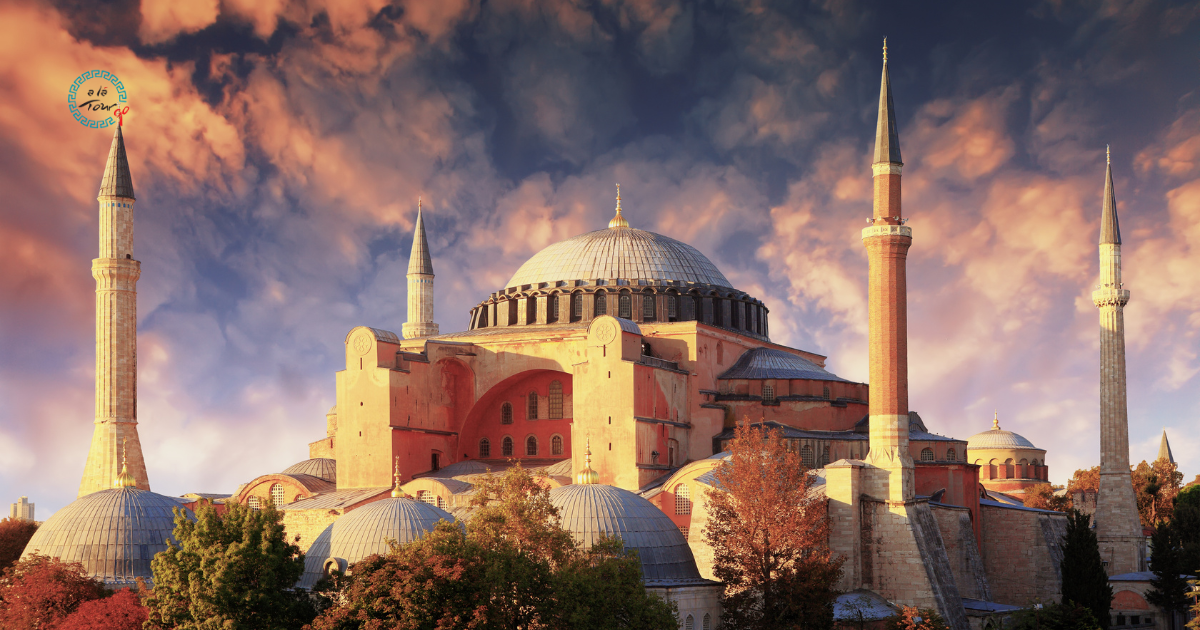
Hagia Sophia has been a cathedral, a mosque, a museum and a mosque again. It is the only building in the world where you can stand under a sixth-century Christian dome, look at a mihrab pointing to Mecca, and hear the call to prayer, all at once. It is also the single most misunderstood visit in Istanbul, because the way you get in changed and most guidebooks have not caught up.
How visiting works now
The building returned to use as a mosque in 2020, and since then the arrangement has settled into two separate experiences in one building.
| Ground floor | A working prayer hall. Free to enter, for worship. Carpeted, shoes off, and busy at prayer times. |
|---|---|
| Upper gallery | The visitor route. A paid ticket, a separate entrance, and where the Byzantine mosaics are. |
If you want to see the mosaics, you want the gallery ticket. The gallery route takes most people 60 to 90 minutes, includes an audio guide in several languages, and gives you the view down into the nave that the ground floor cannot.
As of October 2026 the visitor ticket is priced in euros, at around €25, payable by card. Prices and arrangements here have changed more than once since 2020, so check before you travel rather than trusting a figure in any article, including this one.
When to go, and when not to
- Opening: daily, roughly 09:00 to 19:30, with last entry 30 to 45 minutes before closing. Winter hours are shorter.
- Fridays: the visitor route closes for congregational prayer, roughly 12:30 to 14:30. Go in the morning or after 15:00.
- Daily prayers: the route pauses briefly five times a day. This is a few minutes, not a closure.
- Best time: first thing at opening. By ten the queue is long and the gallery is shoulder to shoulder.
What to wear
It is a mosque, so the mosque rules apply even on the visitor route: shoulders and knees covered for everyone, and women cover their hair. Scarves are available at the entrance if you do not have one. Shoes come off where the carpet begins. None of this is enforced aggressively, but turning up in shorts will cost you time at the door.
The wider etiquette for religious buildings in Turkey is the same here as everywhere else, and we set it out in our guide to Turkish etiquette.
What to actually look at
Most visitors photograph the dome and leave. These are the things worth slowing down for.
The Deësis mosaic
Upper gallery, south side. Thirteenth century, badly damaged, and probably the finest Byzantine mosaic anywhere. Christ between the Virgin and John the Baptist, with a modelling of the face that looks centuries ahead of its date. Most of the lower half is gone, which somehow makes it stronger.
The imperial portrait mosaics
Also in the gallery. The Empress Zoe panel is the odd one: her husband's face was replaced each time she remarried, and you can see where the tesserae were relaid.
The dome itself
Completed in 537, under Justinian, by two men described as a mathematician and a physicist rather than architects. It collapsed once, was rebuilt steeper, and held. For nearly a thousand years it enclosed the largest interior space in the world.
The Viking graffiti
Upper gallery, on a marble parapet. Runes scratched by a member of the Byzantine emperor's Norse guard, roughly the ninth century. It reads as a name. A bored soldier carved it, and it outlasted his empire.
The eight calligraphic roundels
Nineteenth century, among the largest calligraphic panels in the Islamic world, naming God, the Prophet, the first caliphs and the Prophet's grandsons. They were painted for this space and read correctly only from the floor.
Practical notes
- Getting there: T1 tram to Sultanahmet, then a two-minute walk.
- Combining: the Blue Mosque is across the square and free; the Basilica Cistern is three minutes away. All three in one morning is realistic.
- Museum Pass: the gallery ticket is separate and the pass does not cover it. Check what your pass includes in our Museum Pass Türkiye guide.
- Guides: licensed guides wait outside. A good one is worth it here more than almost anywhere, because the building's value is entirely in what you know about it.
Our Istanbul Grand Tour includes Hagia Sophia with a licensed guide and handles the timing around prayers, which is the part that trips up independent visitors.
One honest note to close on. Some visitors arrive expecting the museum of the photographs and find a working mosque with scaffolding in it, prayer carpets on the floor and a queue. That is a real building in use, not a preserved ruin, and it has been in continuous use for fifteen hundred years. Go for that, and it will not disappoint you.
Ready to Experience Türkiye?
Let our expert guides take you on an unforgettable journey across Türkiye's most stunning destinations.
Explore Our Tours