EN
 TR
 DE

Gallipoli, Troy & Ottoman Heartland: The Complete 8-Day Guide
Northwestern Türkiye carries more weight per square kilometre than almost anywhere on Earth. This is where the Trojan War was fought — or at least where its city stood. Where the ANZAC landings of 1915 shaped the national identities of three countries. Where the Ottoman Empire built its first European capital and its greatest mosque. Where the early sultans are buried in a city that still feels like a royal seat. Our Gallipoli, Troy & Ottoman Heartland Tour connects these threads over eight days, from Istanbul through Edirne, Çanakkale, Troy, Assos, Ayvalık and Bursa to İznik.
Day 1: Istanbul — Gateway to the West
The tour begins at Istanbul Airport before heading into the city for the first night. Istanbul is both the starting point and the context for everything that follows — the city that was Constantinople, capital of the Eastern Roman Empire for over a thousand years, and then the Ottoman capital for nearly five centuries more. The Bosphorus visible from the hotel window divides Europe from Asia and sets up the geography of the days ahead.
Day 2: Edirne — The First Ottoman Capital in Europe
Edirne was the Ottoman capital before Constantinople fell in 1453 — the city from which Mehmet II launched the campaign that ended the Byzantine Empire. Its greatest monument, the Selimiye Mosque, was built between 1569 and 1574 by Mimar Sinan, who considered it his masterpiece. The dome surpasses that of Hagia Sophia in diameter. The four minarets, each 70 metres tall, are among the most elegant in the Islamic world. Sinan was over 80 years old when he completed it.
The Eski Mosque — built in 1414 — contains some of the largest calligraphic inscriptions of the names of Allah and the Prophet in the world, painted directly on the walls. The Burmali (Three-Minaret) Mosque, the Sultan Bayezid II Complex on the river outside the city, the Edirne Great Synagogue and the Kırkpınar oil wrestling arena at Sarayiçi complete a day in a city whose importance to Ottoman history is second only to Istanbul.
Day 3: Karaağaç, the Çanakkale Bridge & the Dardanelles
Karaağaç is a neighbourhood of Edirne that was ceded to Greece under the 1923 Treaty of Lausanne and returned to Türkiye in 1947 — its Lozan Monument marks the treaty that established the modern Turkish border. The historic train station, the Meriç Bridge and the emotional complexity of a neighbourhood that changed hands within living memory give a morning of considerable weight.
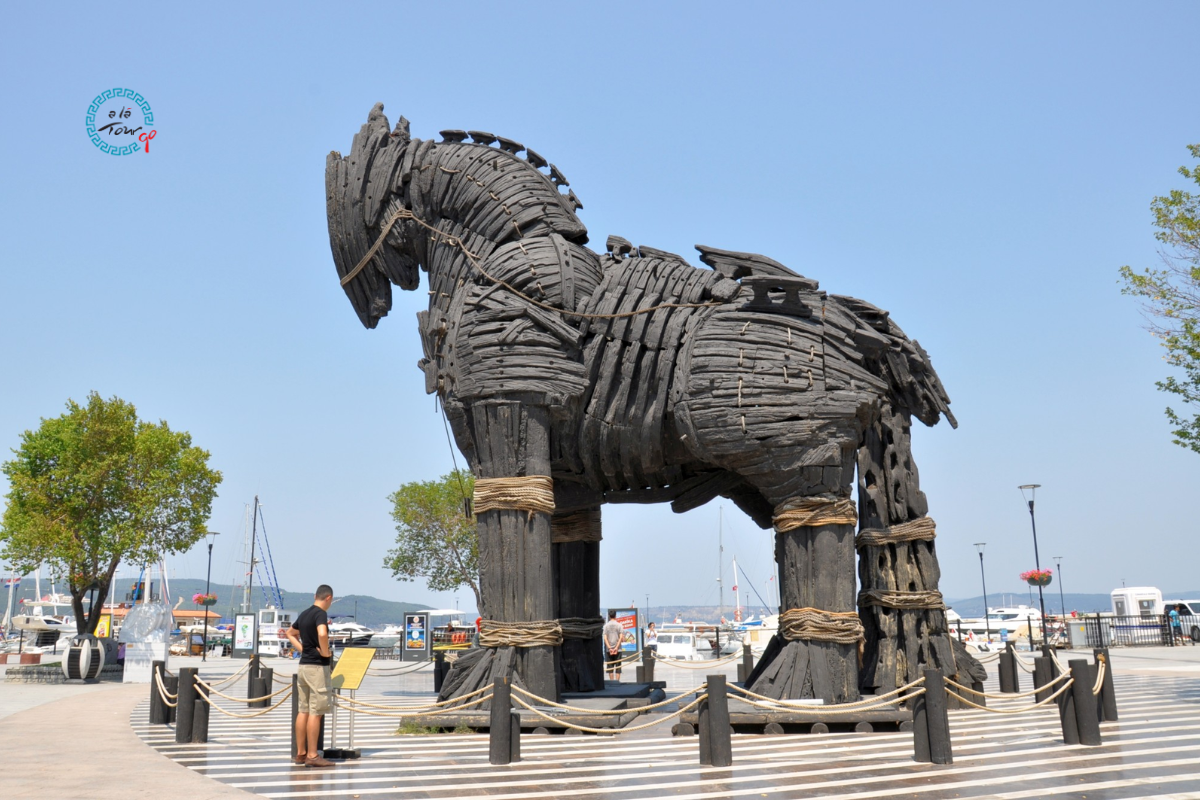
The drive west crosses Thrace to Gelibolu (Gallipoli) and the straits. The Çanakkale 1915 Bridge — at 4.6 kilometres the longest suspension bridge in the world — spans the Dardanelles at its narrowest point, the same strait that the Persian King Xerxes crossed on a pontoon bridge in 480 BC and that Lord Byron swam in 1810. Çanakkale itself, on the Asian side, has the Trojan Horse statue from Wolfgang Petersen's 2004 film on its waterfront and the mirrored bazaar in its centre.
Day 4: Gallipoli — The Battlefields of 1915
The Gallipoli Peninsula Historical National Park covers the battlefield where, between April 1915 and January 1916, Ottoman, British, Australian, New Zealand and French forces fought one of the most costly campaigns of the First World War. Over 100,000 soldiers died on this peninsula — a narrow strip of land between the Dardanelles and the Aegean.
ANZAC Cove, where the Australian and New Zealand Army Corps landed at dawn on 25 April 1915, is a small beach below steep cliffs — it is immediately obvious why the landing failed and why so many men died in the first hours. Chunuk Bair (Conk Bayiri) was the high ground the ANZAC forces were trying to reach. The 57th Regiment Memorial marks where an entire Ottoman regiment was ordered to hold a position and effectively died in place. The Çanakkale Martyrs' Memorial stands at the southern tip of the peninsula — the scale of its columns is calibrated to the scale of the loss. Seyit Onbaşı, the Ottoman corporal who carried a 275-kilogram artillery shell by hand when the mechanical lift failed, is commemorated in a statue that has become one of the most recognised images in Turkish military history.
Day 5: Troy & Assos — Homer's City and Aristotle's School
Troy (Truva) is a UNESCO World Heritage Site and one of the most significant archaeological discoveries in history — nine successive cities built on the same site over 4,000 years, from the Early Bronze Age to the Roman period. Troy VI or VIIa is the layer most scholars associate with the Trojan War, if the war was historical. Whether it was or not, the site is real, the walls are real, and standing on them with the Aegean visible in the distance gives a physical context to Homer's Iliad that no amount of reading can match.
Assos (Behramkale) is where Aristotle founded his school of philosophy in 347 BC after leaving Plato's Academy in Athens — spending three years here before moving to Macedonia to tutor the young Alexander. The Temple of Athena on the acropolis, the ancient harbour below, the Ottoman bridge and the village of Adatepe perched above the olive groves make this one of the Aegean's most complete ancient sites.
Day 6: Ayvalık, Cunda Island & Ulubat Lake
Ayvalık is a small Aegean town built largely by its Greek Orthodox community before 1923, its stone houses and narrow streets still carrying that character. Cunda Island, connected to the mainland by a causeway, has the most complete collection of pre-exchange Greek architecture on the Turkish Aegean — a church, a waterfront and a seafood culture that makes lunch here a natural pause. The Devil's Table viewpoint and Sarımsaklı Beach provide the afternoon before the drive north toward Bursa via Ulubat Lake — one of the largest wetlands in Türkiye and an important stop on the migratory flyway.
Day 7: Bursa — The First Ottoman Capital in Asia
Bursa was the first major Ottoman city — captured in 1326 after a decade-long siege by Osman Gazi, the dynasty's founder, and developed by his successors into a capital of mosques, hans and bazaars. The Grand Mosque (Ulu Camii), built in 1399, has twenty domes and a fountain in its central hall. The Green Mosque (Yeşil Camii) and its matching Green Mausoleum, completed in 1421, are the finest examples of early Ottoman architecture anywhere — their tile work a transition between Seljuk ceramic tradition and the İznik style that would define Ottoman decoration for two centuries.
Cumalıkızık Village, a UNESCO World Heritage Site on the slopes of Uludağ, preserves a complete Ottoman village streetscape — the same timber-framed houses, the same layout, largely unchanged since the 14th century. The Panorama 1326 Bursa Conquest Museum documents the city's capture in a format more immersive than most history museums manage. The Irgandı Bridge — a covered Ottoman bazaar bridge over the Gökdere River, the only surviving example of its type in the world — is a ten-minute walk that most visitors to Bursa miss entirely.
Day 8: İznik — Councils, Tiles & City Walls
İznik was Nicaea — the city where the Council of Nicaea in 325 AD established the Nicene Creed, the foundational statement of Christian doctrine, and where the Fourth Crusade set up the Empire of Nicaea after Constantinople fell in 1204. The Hagia Sophia of İznik, now a mosque, was the church where the councils were held. The Green Mosque, the İznik city walls and the lake visible from within the ancient gates complete the final day of a tour that has covered three thousand years of western Anatolian history.
İznik is also where the tiles that define Ottoman architecture were produced — the deep cobalt blues, the turquoise and the coral red that appear in the Topkapi Palace, the Süleymaniye and the Sultan Ahmed mosques in Istanbul all originated in the workshops of this small lakeside town.
What's Included
The tour covers 8 days and 7 nights with accommodation in quality hotels across Istanbul, Edirne, Çanakkale, Ayvalık, Balıkesir, Bursa and İznik. Included: private vehicle throughout, 7 breakfasts, 7 lunches or dinners, all museum and site entrance fees, professional guides, mandatory travel insurance and tour souvenirs. Not included: international flights and personal expenses.
Dates & Pricing
No upcoming scheduled dates — contact us for custom departure dates. Pricing starts from €1,199 per person in a double or twin room.
Ready to walk where empires were built? View full tour details and enquire →
Ready to Experience Türkiye?
Let our expert guides take you on an unforgettable journey across Türkiye's most stunning destinations.
Explore Our Tours