EN
EN
 TR
TR
 DE
DE

Erzurum Travel Guide 2026: Eastern Anatolia's Hidden Ottoman City
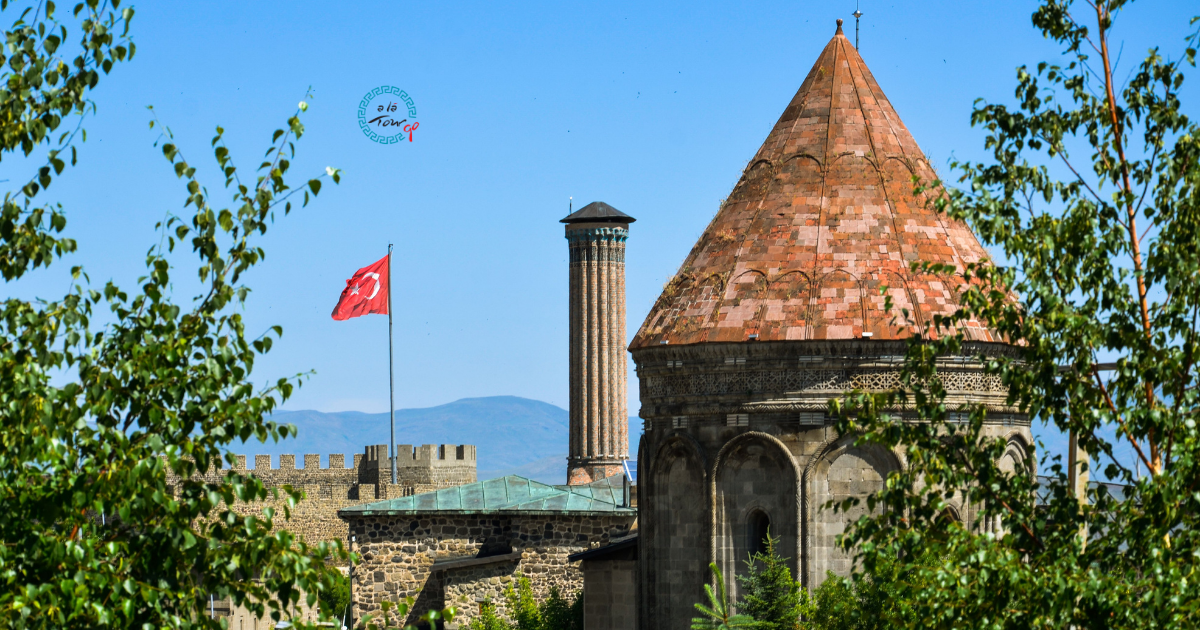
Erzurum is the city most visitors to eastern Turkey pass through without stopping — which is a significant mistake. At 1,900 metres above sea level on the high Anatolian plateau, it is Turkey's highest major city. Its winters are legendary (temperatures regularly reach -30°C). Its summer days are clear and cool at altitude. And its historical core contains some of the finest Seljuk and Ottoman architecture in Turkey — almost entirely unknown outside the country.
Why Erzurum Is Worth More Than a Transit Stop
Erzurum was one of the most strategically significant cities in Anatolia for over a thousand years — the eastern frontier of the Byzantine Empire, then the Seljuk Sultanate of Rum, then the Ottoman Empire. Every power that passed through here built. The results are extraordinary and almost entirely uncrowded.
The specific case for Erzurum:
- The Çifte Minareli Medrese (1253) is considered by many architectural historians to be the finest Seljuk building in Turkey — its twin minarets and elaborately carved stone portal are exceptional
- The Yakutiye Medrese (1310) was built by the Mongol Ilkhanate — a rarity in Turkish architectural history — with a single minaret and detailed geometric tilework
- The Three Tombs (Üç Kümbetler) include the tomb of the Saltukid ruler Emir Saltuk (12th century) — one of the oldest Turkish monuments in Anatolia
- The old bazaar district around Taşhan (1744) is a genuinely functioning Ottoman commercial complex that has never been significantly restored or touristified
What to See in Erzurum
Çifte Minareli Medrese — The Finest Seljuk Portal in Turkey
Built in 1253 during the reign of the Ilkhanate as a theological school, the Çifte Minareli (Double-Minaret) Medrese has a carved stone entrance portal that is among the most elaborate in Turkish Islamic architecture. The twin minarets decorated with turquoise tile mosaic are the visual symbol of Erzurum.
What to know:
- Entry is free; the inner courtyard and cells are accessible
- The building now functions partially as a museum and partially as a cultural space
- Allow 45–60 minutes
Yakutiye Medrese (1310)
Built by the Mongol Ilkhanid governor Cemaleddin Yakut, this medrese is now the Erzurum Turkish and Islamic Arts Museum. The single minaret, the carved stone portal and the interior geometric tilework are all exceptional.
Allow: 45 minutes including the museum collection.
Erzurum is included in our Eastern Anatolia Tour →
Erzurum Castle (İç Kale)
The inner citadel at the heart of the city has a complex history — Urartian foundations, Byzantine construction, Arab expansion, Seljuk and Ottoman modification. The Clock Tower (Saat Kulesi) at the top of the castle is the city's visual landmark. The view from the castle walls over the plateau and the surrounding mountains is extensive.
The Three Tombs (Üç Kümbetler)
Three cylindrical tower tombs on the western edge of the old city, dating from the 12th to 14th centuries. The largest — the tomb of Emir Saltuk — is one of the oldest surviving Turkish monuments in Anatolia. The architectural style (cylindrical tower tomb with conical cap) is characteristic of northeastern Anatolian Islamic funerary architecture and is unlike anything in western Turkey.
Taşhan and the Bazaar District
The Taşhan (Stone Inn, 1744) is a two-storey Ottoman caravanserai in the centre of Erzurum's bazaar district. Unlike many caravanserais that have been converted to tourist uses, Taşhan still functions as a commercial space — the shops around the ground floor courtyard sell local products, particularly oltu stone jewellery.
Oltu taşı (jet) — a black semi-precious stone unique to the Oltu district near Erzurum — is used to make prayer beads, rings and pendants that are the most distinctive locally-made product in the region.
What to Eat in Erzurum
Erzurum's food culture is shaped by the altitude, the severe winters and the pastoral economy of the surrounding plateau.
Cağ kebabı — the horizontal rotating kebab that originated in the Erzurum region (the name comes from the cağ, or axle, it rotates on). Thin slices of marinated lamb are cut from the rotating skewer and eaten on flatbread with fresh onion and parsley. This is the dish Erzurum is most proud of and most entitled to be proud of — it predates the döner by centuries.
Kadayıf dolması — a uniquely Erzurum dessert: kadayıf (shredded wheat pastry) rolled around walnuts and soaked in grape molasses. Not found anywhere else in Turkey in this form.
Mıhlama (kuymak) — a dish shared with the Black Sea region: cornmeal cooked with butter and local cheese until it reaches a thick, stringy consistency. Erzurum's version uses plateau cheese that gives it a sharper flavour than the coastal equivalent.
Erzurum as a Base for Eastern Anatolia
Erzurum's position on the high plateau makes it a natural hub for the eastern region:
- Kars: 2 hours east — Kars city, Ani ruins, Sarıkamış ski resort
- Doğubeyazıt: 2.5 hours south — Ishak Pasha Palace, Mount Ararat views
- Artvin: 3 hours north — Georgian valleys, medieval Georgian churches
- Uzungöl: 3 hours northwest — the famous highland lake on the Black Sea approach
Practical Information
Getting to Erzurum:
- By air: Erzurum Airport (ERZ) has connections from Istanbul (Turkish Airlines, Pegasus, AnadoluJet) — approximately 1 hour 45 minutes flight; multiple daily departures
- By train: The Doğu Ekspresi (Eastern Express) from Ankara passes through Erzurum — approximately 20 hours; scenically extraordinary, particularly in winter
- By bus: From Kars (2 hours), Van (5 hours), Trabzon (3.5 hours)
Best time to visit:
- June–September — clear plateau weather, comfortable temperatures (rarely exceeding 25°C at altitude)
- December–March — winter visits for those who want dramatic snow landscapes and ski access to Palandöken (a good ski resort directly above the city)
- Avoid April–May — the plateau thaw period; mud and unpredictable road conditions
How long to spend: The city itself deserves a full day minimum. 2 nights allows a day trip to Kars or Doğubeyazıt and time in the city.
Want to visit Erzurum as part of a guided Eastern Anatolia tour?
Our Eastern Anatolia Tour covers Erzurum alongside Van, Kars, Ani and Doğubeyazıt.
Reach us via the WhatsApp button on the right side of our website — we respond within 24 hours.
Ready to Experience Türkiye?
Let our expert guides take you on an unforgettable journey across Türkiye's most stunning destinations.
Explore Our Tours