EN
 TR
 DE

Cappadocia, Konya & Ankara: The Complete 8-Day Heritage Guide
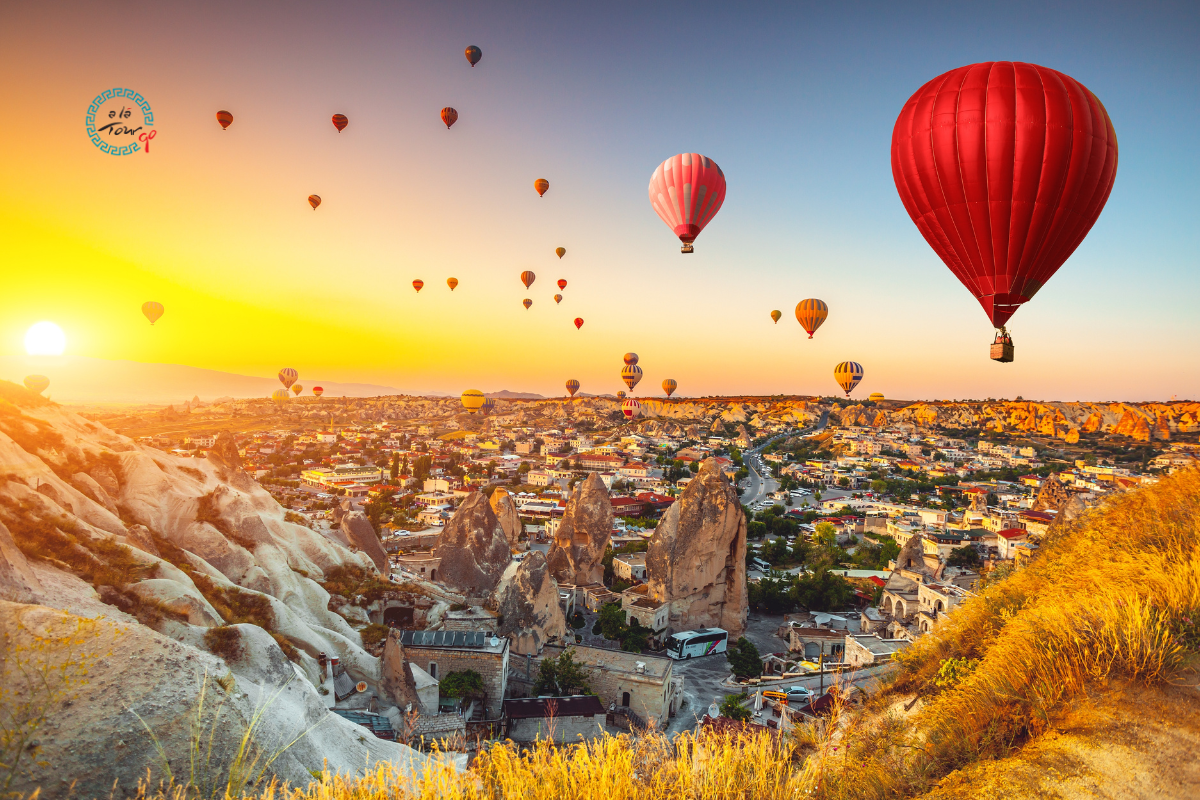
Western Anatolia is the part of Türkiye that surprises visitors most consistently. It is not a region associated with any single headline attraction — no Istanbul, no Cappadocia — but it contains a concentration of Roman ruins, Ottoman towns, volcanic lakes, cave systems and thermal pools that would be individually famous if they were anywhere less competition-dense. Over eight days, this tour moves from Aydın through Pamukkale, Salda Lake, Isparta, Afyonkarahisar, Eskişehir, Kütahya and the ancient cities of Aizanoi and Sardis before ending in İzmir. Our Pamukkale, Lakes & Ancient Cities tour is for travellers who want Türkiye without the crowds.
Day 1: Arrival — Aydın & the Meander Valley
The tour begins at Adnan Menderes Airport and heads east to Aydın — ancient Tralles, a Hellenistic city on the southern edge of the Meander Valley. The valley itself, whose wandering river gave the English language the word "meander," is one of the most fertile and historically layered plains in Anatolia. The first night here is a gentle introduction to a region that reveals itself slowly.
Day 2: Nysa, Hierapolis & the Pamukkale Travertines
Nysa Ancient City — built on a hillside above the Meander plain — is one of those sites that rewards the curious: a Roman theatre, a library, a tunnel cut through the rock for drainage, and a gerontikon (council of elders) all visible in varying states of preservation. Most visitors to the region drive past without stopping.
Hierapolis is impossible to drive past. The ancient city above Pamukkale was established as a spa town in the 2nd century BC, grew into a major Roman settlement and was still inhabited in the Byzantine period. Its theatre — one of the best preserved in Anatolia — seats 15,000. The necropolis stretching for over a kilometre outside the city walls is the largest in Asia Minor. And then there is the Antique Pool (Cleopatra's Pool): a thermal swimming pool at 36°C in which the submerged columns of an ancient colonnade lie on the bottom, the result of an earthquake that toppled them into the spring-fed water sometime in antiquity. Swimming among Roman columns in thermal water is an experience that defies adequate description.
The Pamukkale travertines — the white calcium carbonate terraces that have made this site one of the most photographed in Türkiye — are the result of mineral-rich thermal water flowing over the cliff edge for millennia, depositing calcium carbonate in shallow pools as it cools. The sight of white terraces descending the hillside, the pools filled with warm blue water, is genuinely unlike anything else.
Day 3: Salda Lake, İnsuyu Cave & Isparta's Roses
Salda Lake is a volcanic crater lake in Burdur province whose white mineral shoreline and extraordinary turquoise water have earned it comparisons to the Maldives — and attracted the attention of NASA, which has studied its sediment as an analogue for the hydrothermal mineral deposits found in Mars's Jezero Crater. The water is genuinely that colour, the shoreline genuinely that white, and the lake genuinely that quiet.
İnsuyu Cave, near Burdur, contains stalactite and stalagmite formations across a series of interconnected chambers — with a small lake inside the cave that makes the lighting effects more spectacular than most. The Bakibey Mansion in Burdur is a restored Ottoman residence that gives a physical sense of provincial prosperity in the 19th century.
Isparta is the rose capital of Türkiye — most of the rose oil used in Turkish perfumes and cosmetics comes from the Gülbirlik cooperative here, and in late May and early June the entire Gülbirlik valley is in bloom. The Rose Bazaar sells attar, rose water, lokum and dried flowers. The Firdevs Mosque, built by Mimar Sinan, provides the city's architectural centrepiece.
Day 4: Eğirdir Lake & Afyonkarahisar
Eğirdir is a town built on a peninsula extending into Eğirdir Lake — one of the largest freshwater lakes in Türkiye, ringed by mountains, with an island connected by a causeway. The morning here is simply pleasant: the lake, the castle on the water's edge, the cafes on the peninsular streets. It is the kind of place that appears on no must-see list but consistently remains in the memory.
Afyonkarahisar — the city of the black fortress of opium — takes its name from the volcanic rock that rises 226 metres above the city centre, topped by a Phrygian, then Byzantine, then Ottoman castle. Afyon is Türkiye's cream capital: kaymak (clotted cream) and sucuk (spiced sausage) are produced here in quality found nowhere else in the country. The Great Mosque, the Sultan Divani Mevlevihane Museum, the Gedik Ahmet Paşa Mosque and the historic bazaar fill an afternoon in a city that is almost completely ignored by international tourism.
Day 5: Ayazini, Emre Lake, Seyitgazi & Eskişehir
Ayazini is a Phrygian rock settlement — cave churches, rock-cut tombs and ancient dwellings carved into the volcanic tuff of a canyon, used continuously from the Phrygian period through Byzantine times. Emre Lake, nearby, is a small crater lake of unusual stillness. Seyitgazi contains the tomb of Battal Gazi — a legendary Arab-Turkish warrior whose story became one of the most widely told in early Anatolian oral tradition — surrounded by a large Ottoman complex.
Eskişehir is where the tour changes register entirely. A university city of 800,000, it has invested heavily in culture and public space: the Porsuk Canal with its gondolas and cafes, the Odunpazarı Ottoman quarter, the Meerschaum Gallery (Eskişehir is the world's primary source of the mineral used for carved pipes), the Yılmaz Büyükerşen Wax Sculpture Museum and the Türasaş railway museum all represent a city that takes its own cultural life seriously. The Sazova Science Culture and Arts Park — with its fairy tale castle, lake and sculptures — is a genuinely extraordinary piece of public urban design.
Day 6: Odunpazarı Quarter & Kütahya
The Odunpazarı district of Eskişehir is a UNESCO Creative City of Crafts neighbourhood of restored Ottoman timber houses, art galleries, boutique hotels and the Odunpazarı Modern Museum — designed by the Japanese firm Kengo Kuma and housing one of the most significant private art collections in Türkiye. The Kurşunlu Mosque and the Arasta Bazaar complete a morning in a neighbourhood that feels as contemporary as it is historical.
Kütahya, an hour south, is Türkiye's ceramic tile capital — a craft tradition that goes back to the 15th century and still produces the hand-painted pottery and tiles sold throughout the country. The Tile Museum, housed in a restored Ottoman building, traces this history. The Hungarian House commemorates Lajos Kossuth, the Hungarian revolutionary who spent time in exile here in 1850. Kütahya Castle and the Germiyanoğulları street of Ottoman houses complete a day in a city that is almost entirely visited by Turks rather than international tourists.
Day 7: Aizanoi, Kula & Sardis — Three Forgotten Cities
Aizanoi is one of the best-preserved Roman cities in Anatolia that most visitors to Türkiye have never heard of. Its Temple of Zeus — built in the 2nd century AD, standing to almost full height — is one of the finest surviving examples of Roman temple architecture anywhere in the Mediterranean world. The stadium, theatre, macellum (market) and the ancient bridge over the Penkalas River are all visible and largely unvisited. The site has been under active excavation since the 1970s and continues to yield new discoveries.
Kula's volcanic landscape — the result of eruptions between 1,400 and 2,800 years ago — is called the Kula Geopark, and the lava fields give an eerie backdrop to a town of Ottoman houses built on the slopes. Sardis was the capital of the Lydian Empire — the civilisation that invented coinage around 600 BC — and the site of one of the largest synagogues in the ancient world. The Temple of Artemis, the gymnasium and the synagogue are all visible in a setting of considerable beauty below the Tmolus mountain range.
What's Included
The tour covers 8 days and 7 nights with accommodation in quality hotels across Aydın, Denizli, Isparta, Afyonkarahisar, Eskişehir, Kütahya and İzmir. Included: private vehicle throughout, 7 breakfasts, 7 lunches or dinners, all museum and site entrance fees, professional guides, mandatory travel insurance and tour souvenirs. Not included: international flights and personal expenses.
Dates & Pricing
Two departures available: 6 June 2026 (12 spots) and 19 September 2026 (16 spots). Pricing starts from €1,199 per person in a double or twin room.
Ready to discover western Türkiye? View full tour details and book your place →
Ready to Experience Türkiye?
Let our expert guides take you on an unforgettable journey across Türkiye's most stunning destinations.
Explore Our Tours