EN
 TR
 DE

Ani Ruins: Complete Guide to Turkey's Forgotten Medieval City 2026
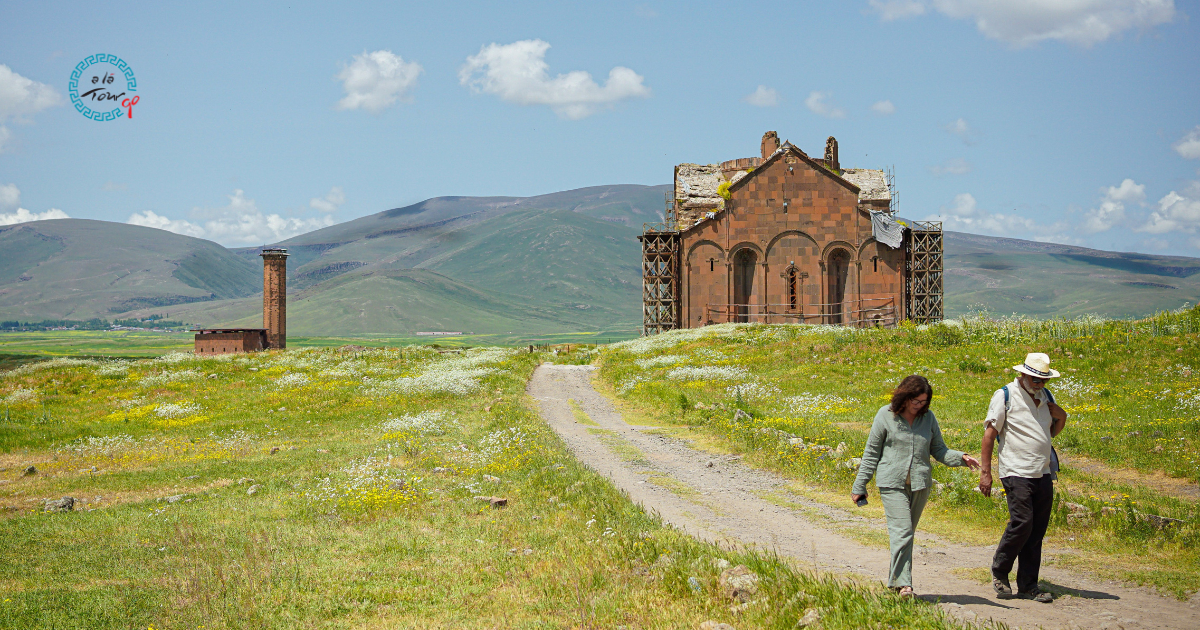
Ani is one of the most extraordinary places in Turkey — and almost no one outside specialist history circles has heard of it. A medieval city that once housed 100,000 people, rivalled Constantinople in wealth and sophistication, and served as the capital of the Bagratid Armenian kingdom now stands entirely empty on a windswept plateau above the Armenian border. The cathedral still stands. The mosque still stands. The bridge over the Arpa River gorge still stands. Almost no one is there.
Here is everything you need to know to visit it.
What Is Ani?
Ani is an abandoned medieval city in Kars province, northeastern Turkey, located directly on the border with Armenia — the Arpa River forms the frontier, and on clear days you can see Armenian villages on the opposite bank.
At its peak between the 10th and 13th centuries, Ani was:
- The capital of the Bagratid Armenian kingdom
- Home to an estimated 100,000 people — making it one of the largest cities in the medieval world
- A major stop on the Silk Road between Constantinople and the east
- Famous for its palaces, churches, mosques and fortifications built in a distinctive style that influenced architecture across the region
The city was sacked by the Mongols in 1236, further damaged by Tamerlane's forces in 1319, and eventually abandoned after a devastating earthquake in 1319. It has been largely empty ever since — 700 years of silence on the plateau.
UNESCO World Heritage Site since 2016.
Ani is included in our Eastern Anatolia Tour covering Lake Van, Ishak Pasha and Kars →
What You Actually See at Ani
The site covers approximately 5 square kilometres — larger than many visitors expect. Allow at least 3 hours for a proper visit; a full morning is better.
The Cathedral of Ani (Surp Prgich)
Built between 989 and 1001 AD, the cathedral is the most dramatic structure at Ani. Its ribbed vault predates equivalent European Gothic construction by over a century. The exterior stonework — alternating bands of red and black volcanic stone — has survived with extraordinary completeness. The interior has lost its frescoes but the architectural space remains overwhelming.
The Church of the Redeemer (Surp Prkich)
Partially collapsed — one half of the circular church fell in a 1957 earthquake, leaving a dramatic cross-section of the original structure exposed. One of the most photographed images at Ani.
The Mosque of Manuchihr
Built in the 11th century, this is one of the oldest mosques in Anatolia. The minaret — octagonal, decorated with geometric patterns — is the most intact element. The mosque was built by the Seljuks who occupied the city after its fall from Armenian control.
The Citadel (İç Kale)
The heavily fortified inner citadel at the northeastern point of the site; the walls and towers here give the clearest sense of Ani's defensive scale.
The Church of St Gregory (Tigran Honents)
The best-preserved frescoed interior at Ani — biblical scenes and portraits of Bagratid rulers survive on the walls, faded but readable. One of the most significant examples of medieval Armenian painting accessible to visitors.
The Silk Road Bridge
The single-arch bridge over the Arpa River gorge, built in the 11th or 12th century, still spans the ravine at the base of the plateau. The view from the bridge — up to the city walls, across to Armenia — is one of the most dramatic at the site.
The City Walls
The triple walls protecting the northern approach to the city extend for over 1.5 kilometres and reach heights of 10 metres. Walking the length of the walls gives the best sense of Ani's original scale.
The Atmosphere at Ani
This is not a site that needs explanation to feel extraordinary. The combination of the scale — a city of 100,000 people, entirely empty — the plateau setting, the sound of wind through empty doorways, the Armenian border visible across the gorge, and the quality of the surviving architecture creates something that is genuinely difficult to describe.
Most visitors arrive, enter the site and go quiet. The silence is that complete.
Photography tip: Ani is at its most dramatic at sunrise — the low light on the volcanic stone and the mist over the Arpa gorge are exceptional. The site opens early enough to allow this. Come early and stay for at least two hours before other visitors arrive.
Practical Information
Location: 45 kilometres east of Kars city; approximately 1 hour by road
Getting to Ani:
- From Kars: taxi (approximately 45 minutes each way; negotiate a waiting fee with the driver) or dolmuş on market days
- From Erzurum: approximately 3 hours by road via Kars
- From Van: approximately 5 hours by road
Opening hours: Daily, approximately 08:00–19:00 in summer (reduced in winter)
Entry: Single ticket covers the entire site; the ticket office is at the main gate
What to bring:
- Water — no facilities inside the site
- Sun protection — almost no shade on the plateau
- Good walking shoes — the terrain is uneven and the distances are significant
Best time to visit:
- May and June — wildflowers on the plateau, comfortable temperatures, best light
- September — excellent weather, fewer visitors than summer
- October — dramatic atmosphere as the plateau turns amber; first snows possible on higher ground
Avoid: July and August midday — the plateau becomes very hot; November to April — snow frequently closes access roads
Combining Ani with Other Eastern Anatolia Sites
Ani works best as part of a 3 to 5 day Eastern Anatolia itinerary centred on Kars:
Day 1: Arrive Kars — Kars Museum, Russian-era city centre
Day 2: Full day at Ani — arrive at opening, stay until midday
Day 3: Kars → Doğubeyazıt — Ishak Pasha Palace, Mount Ararat
Day 4: Doğubeyazıt → Van — Akdamar Island, Lake Van
Why Choose AlaTourqo?
As a TÜRSAB #16222-certified tour operator, our Eastern Anatolia Tour includes a full morning at Ani alongside Lake Van, Akdamar Island and Ishak Pasha Palace — with expert local guides who know the archaeological and historical context in depth.
Reach us via the WhatsApp button on the right side of our website — we respond within 24 hours.
Ready to Experience Türkiye?
Let our expert guides take you on an unforgettable journey across Türkiye's most stunning destinations.
Explore Our Tours