EN
EN
 TR
TR
 DE
DE

Regional Turkish Cuisine: What to Eat in Each of Turkey's 7 Regions

Asking "what should I eat in Turkey?" is like asking what to eat in all of Europe. The answer depends entirely on where you are. A breakfast in Van looks nothing like one in İzmir. A kebab in Adana bears no resemblance to a kebab in Ankara. Turkey's 7 geographic regions each have their own culinary identity — shaped by climate, geography, history and the cultures that have passed through.
This guide tells you exactly what to order in each one.
Region 1: Marmara — Istanbul and the Ottoman Table
The Marmara region, centred on Istanbul, is where every regional tradition converges. The Ottoman imperial kitchen absorbed influences from the Balkans, the Caucasus, the Arab world and the Aegean — and the result is Turkey's most cosmopolitan food culture.
What to eat:
- Balık ekmek — grilled fish sandwich from boats at Eminönü; the most iconic Istanbul street food
- Midye dolma — stuffed mussels, sold by the tray on the street; eat them standing, squeeze lemon over each one
- Islak burger — "wet burger" steamed in its own juices; late-night Taksim institution
- Meyhane meze — cold small plates at a traditional rakı restaurant: haydari, patlıcan salatası, ahtapot, mücver
- Kuzu çevirme — whole roast lamb, a Marmara specialty found in traditional lokanta restaurants
- Tarama — cured fish roe paste, served cold with bread; a Greek-influenced survivor of Ottoman Istanbul
Don't miss: Sunday breakfast in Kadıköy market — the best concentration of quality breakfast spots in the city.
Visiting Istanbul as part of a guided tour? Our Marmara Tour includes Istanbul alongside Bursa, Edirne and Çanakkale →
Region 2: Aegean — Olive Oil and Wild Herbs
The Aegean is Turkey's most Mediterranean region — and its food reflects that. Olive oil is the defining ingredient, used not as a condiment but as the cooking base for almost everything. The vegetables are extraordinary; the seafood is fresh; the herbs are wild.
What to eat:
- Zeytinyağlılar — cold olive oil dishes: artichokes, green beans, stuffed vegetables, all cooked gently and served at room temperature
- Çupra (sea bream) and levrek (sea bass) — grilled whole over charcoal; order what is fresh that day
- Ot kavurması — wild herbs sautéed in olive oil; a dish that barely exists outside the Aegean
- Tarhana çorbası — fermented grain soup; deeply flavoured, unlike anything in European cooking
- Bodrum mantısı — a local variation of Turkish dumplings, smaller and lighter than Central Anatolian versions
- Kemalpaşa tatlısı — a local sweet from İzmir province; small cheese pastries soaked in syrup
Don't miss: The Alaçatı herb market on weekend mornings — the best wild herb selection in Turkey.
Region 3: Mediterranean (Akdeniz) — Citrus, Spice and Ancient Flavours
The Mediterranean coast adds spice to the Aegean template. Pomegranate molasses, red pepper paste and Taurus Mountain herbs appear throughout. The seafood is exceptional; the meat dishes lean heavier.
What to eat:
- Tantuni — minced meat and vegetables stir-fried in a wok-like pan, wrapped in thin flatbread; originally from Mersin, now everywhere on the coast
- Şiş köfte — minced meat on flat skewers, grilled over vine wood; particularly good in Antalya
- Hibeş — tahini with garlic and red pepper, a local Antalya meze found nowhere else
- Katmer — a flaky pastry with clotted cream and pistachio; a Gaziantep preparation that has spread to the coast
- Medlye (mussel) dishes — the Mediterranean coast has its own mussel preparations distinct from Istanbul's
- Portakal (orange) and nar (pomegranate) — both grown locally; the freshly squeezed juice on the Antalya seafront is exceptional
The Mediterranean coast is covered in our Antalya & Turquoise Coast Tour →
Region 4: Central Anatolia — Hearty, Grain-Based, Ancient
The high plateau of Central Anatolia produces a robust cuisine built on wheat, lamb and dairy. Mantı — tiny dumplings — originated here. So did tarhana, the fermented grain paste that makes a soup like nothing else.
What to eat:
- Mantı — tiny lamb-filled dumplings, served with yoghurt, garlic butter and dried mint; Kayseri is considered the home of the finest version
- Pastırma — intensely flavoured cured beef, rubbed with a paste of fenugreek and garlic; Kayseri is the production capital
- Sucuk — spiced sausage; the Afyon and Kayseri versions are among the finest in Turkey
- Testi kebabı — meat and vegetables sealed inside a clay pot and slow-cooked over embers; cracked open at the table; Cappadocia's most theatrical dish
- Gözleme — thin flatbread cooked on a saç griddle, filled with cheese or potato; best at village markets
- Nevşehir şarabı — Cappadocia's wine, made from ancient grape varieties including Emir (white) and Öküzgözü (red)
Don't miss: The pottery workshop restaurants of Avanos — where you can watch your testi kebabı being made.
Region 5: Black Sea — Corn, Anchovy and Green Intensity
The wet, forested Black Sea highlands produce Turkey's most distinctive regional cuisine. Corn is the staple — not wheat. Anchovy (hamsi) is the regional symbol. The dairy is extraordinary.
What to eat:
- Hamsi tava — anchovies fried in cornmeal; the quintessential Black Sea dish; eat them whole
- Hamsi pilavı — anchovy rice; one of the most unusual preparations in Turkish cooking
- Mısır ekmeği — corn bread; dense, slightly sweet; served warm with butter alongside every meal
- Karalahana çorbası — black cabbage soup; intensely flavoured, nourishing; the everyday soup of the highlands
- Kuymak — Black Sea fondue; cornmeal cooked with butter and local cheese until it becomes a rich, stretchy mass; served in the pan
- Kars gravyeri — a gruyère-style aged cheese from Kars, introduced by Russian settlers in the 19th century; available throughout the Black Sea region
Our Black Sea Tour covers Trabzon, Uzungöl, Rize and the Kaçkar highlands — with local restaurant stops throughout.
Region 6: Eastern Anatolia — Simple, Intense, High-Altitude
Eastern Anatolia's food reflects the demands of a cold, high-altitude environment. The ingredients are extraordinary — mountain honey, aged cheese, wild herbs that grow only above 2,000 metres — and the preparations are simple enough to let them speak.
What to eat:
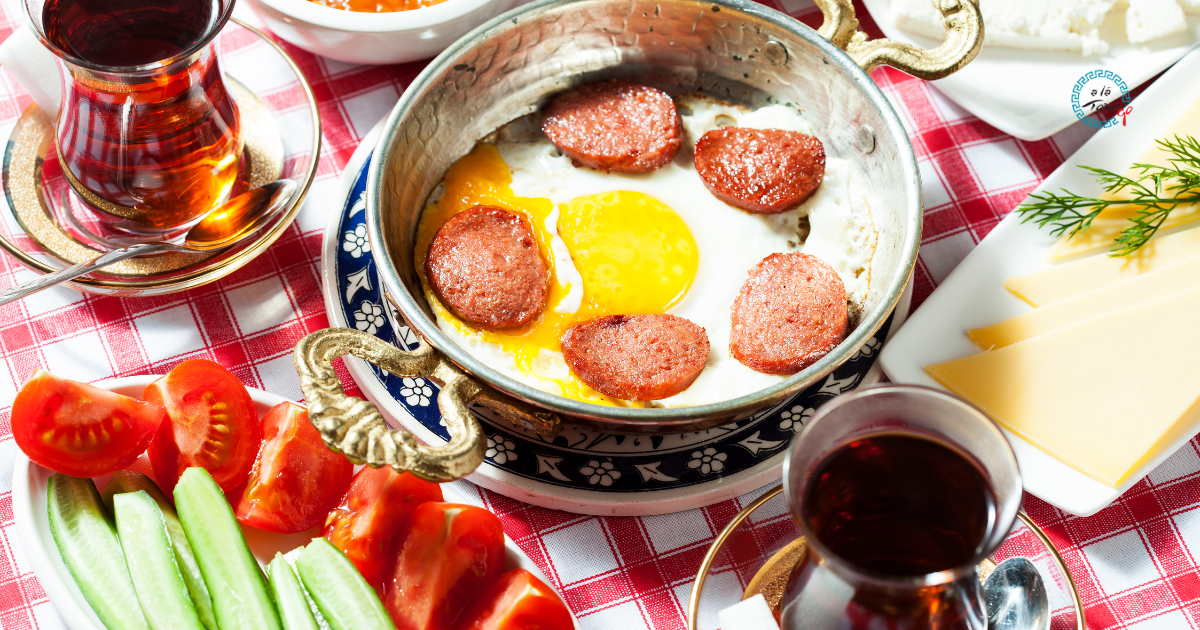
- Van kahvaltısı — the Van breakfast is considered by many to be the finest in Turkey; local herbs, several types of regional cheese, mountain honey and herbed butter distinguish it from anything served elsewhere
- Otlu peynir — herb cheese from Van; pressed with wild highland herbs; sharp, unusual, addictive
- Kars balı — honey from the Kars highlands; a different product from commercial honey in every way
- Cağ kebabı — horizontal döner grilled over wood; from Erzurum; the meat is hand-cut to order in small portions and eaten with flatbread
- Kadayıflı dolma — a sweet from the region; shredded wheat stuffed with walnuts, not widely found outside the east
- Tulum peyniri — aged cheese from Erzincan; pungent and crumbly; one of Turkey's great cheeses
Region 7: Southeastern Anatolia — The Spice Route
Southeastern Turkey is where Turkish food meets the cooking traditions of the Arab world — and the result is Turkey's most celebrated regional cuisine. Gaziantep has a UNESCO Creative City of Gastronomy designation for good reason.
What to eat:
- Gaziantep baklavası — made with Antep pistachios; lighter, less sweet and more complex than versions made elsewhere; the baklava district around Düztepe is the source
- Beyran — a breakfast soup of rice, lamb and spices; deeply flavoured; not found outside Gaziantep
- Ali Nazik — kebab on smoked aubergine purée with yoghurt; one of the great Turkish dishes
- Adana kebabı — long minced lamb kebab on flat skewers, grilled over charcoal; significantly spicier than most Turkish food; the original in Adana is incomparably better than any copy
- Künefe — shredded wheat layered with fresh stretchy cheese, soaked in syrup and served hot; Hatay's version is the finest in Turkey
- İsot biber — the smoky, almost black Urfa pepper; not a dish but an ingredient that defines the region's flavour; buy it to take home
The Southeastern region is the highlight of our Göbeklitepe, Nemrut & Mesopotamia Tour →
Want to eat your way through Turkey's regions on a guided tour?
Our tours include meals at local restaurants chosen by guides who know where the food is actually good — not where tourists are sent.
Reach us via the WhatsApp button on the right side of our website — we respond within 24 hours.
Ready to Experience Türkiye?
Let our expert guides take you on an unforgettable journey across Türkiye's most stunning destinations.
Explore Our Tours