EN
 TR
 DE

Internet in Turkey: eSIM, SIM Cards and Staying Connected
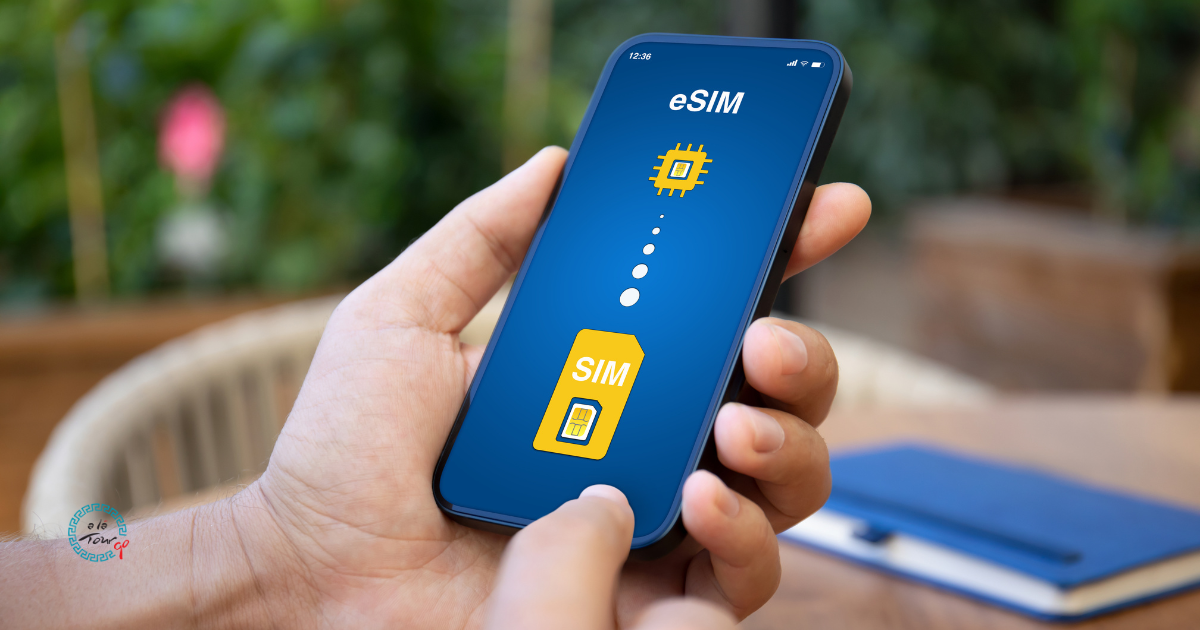
Turkey has fast, cheap, widely available mobile data. The confusing part is not coverage — it is choosing between a travel eSIM you activate before you land and a Turkish operator line you buy at a counter with your passport. They cost different amounts, work differently, and one of them starts a clock on your phone that the other does not.
Here is how to decide in about two minutes.
The two options, honestly compared
A travel eSIM (Airalo, Holafly and similar apps) is a data plan you buy online, install before departure, and switch on when you land. Technically it roams onto a Turkish network using a foreign operator profile. Small plans start around 5 US dollars; roughly 10 GB costs in the region of 13 dollars. You keep your own number on your physical SIM for calls and SMS, and the eSIM carries the data.
A Turkish operator line from Turkcell, Vodafone Türkiye or Türk Telekom gives you a Turkish number, more data for the money, and the ability to receive SMS codes from Turkish services. You have to buy it in person, in an official branch, with your passport.
For a one-week tour, the travel eSIM wins on simplicity almost every time. For three weeks or longer, or if you want a Turkish number, the local line is better value.
What the Turkish operators sell tourists
All three run a 28-day welcome pack aimed at visitors. These are the figures reported in late 2026; branches, campaigns and taxes move them around, so treat them as a guide and confirm at the counter.
| Operator | Package | Data and minutes | Validity | Price |
|---|---|---|---|---|
| Turkcell | Tourist Welcome Pack | 20 GB + 200 min + unlimited WhatsApp | 28 days | 1,800 TL |
| Vodafone | Welcome to Turkey | 20 GB + 750 min | 28 days | around 1,500 TL |
| Vodafone | Larger pack | 50 GB | 28 days | around 1,850 TL |
| Türk Telekom | Hoş Geldin | 25 GB + calls and SMS | 28 days | around 1,000 TL |
Four things nobody tells you at the door
- You cannot buy online. Foreign passport holders have to go into a store. The operators' apps are built for Turkish ID numbers.
- Bring your passport, and expect it to be scanned. The line is registered to your name and passport number. This is a legal requirement, not an upsell.
- All three can issue an eSIM instead of a plastic SIM — but say so before the assistant starts the process, and ask for the QR code. Retrofitting it afterwards is painful.
- Airport counters are the worst deal. They are the most expensive option and usually the longest queue. A branch in town is cheaper and faster.
The IMEI rule, explained without the panic
This is the part that fills forums with alarming posts, so here it is plainly.
When you put a Turkish line into a phone that was registered abroad, the operator reads your handset's IMEI number and a clock starts. After roughly 120 days of use, the handset is blocked from all Turkish networks until it is registered with the regulator and the registration fee is paid. For 2026 that fee is 54,258 TL — a figure that is reset upward every January and is more than most phones are worth.
Two things follow from that.
- If you are here for a holiday, this does not affect you. A seven-, ten- or twenty-one-day trip is nowhere near 120 days. Buy the local SIM without worrying.
- A travel eSIM does not start the clock at all, because it connects as a roaming foreign line rather than a Turkish subscription. If you visit Turkey often, own property here, or are approaching the limit from previous stays, that is a real reason to choose the travel eSIM over a local line.
A blocked phone still works on Wi-Fi, and removing the Turkish line restores service through a roaming eSIM. But it is a miserable thing to discover on day three of a trip, so if you are a frequent visitor, count your days.
Coverage on a touring route
In Istanbul, İzmir, Ankara, Antalya and every provincial capital, 4G is strong and 5G is spreading. On the routes our tours use, you will have signal in all the towns and on nearly all the main roads.
Where it thins out is predictable: the Munzur valley above Ovacık, the last stretch of the climb up Nemrut, parts of the Kaçkar and Munzur highlands, and some of the canyon roads around Kemaliye. Download your offline maps and any audio guides before you leave the hotel. On a guided tour this matters less, because the coach follows main roads and your guide is the one navigating.
Hotel Wi-Fi is standard everywhere we stay and generally good enough for video calls. Cafés and restaurants nearly all have Wi-Fi; some ask for a Turkish mobile number to send a code, which is one small argument for a local line if you plan long café afternoons.
What we would actually do
- Seven to fourteen days on a guided tour: travel eSIM, 5 to 10 GB, installed before you fly. Nothing to queue for, nothing to register.
- Two weeks or more travelling independently: Turkish line from a city branch. More data, and a local number for restaurant bookings and domestic flights.
- Repeat visitor or property owner: travel eSIM, and keep track of how many days your handset has spent on Turkish networks.
- Travelling as a couple or family: one Turkish line with a big data pack, shared by hotspot, is usually cheaper than four travel eSIMs.
If you are joining one of our tours, your guide carries a local line and a hotspot, and group WhatsApp is how we handle meeting points and timing changes — so make sure WhatsApp works on your phone before you travel.
Related reading
- Renting a Car in Turkey vs Joining a Tour
- What to Wear in Turkey
- How Far in Advance Should You Book a Turkey Tour?
Our tours
Ready to Experience Türkiye?
Let our expert guides take you on an unforgettable journey across Türkiye's most stunning destinations.
Explore Our Tours